News

Why Belt Pulleys Are Core Components in Electric Motor Drive Systems?

2026-10-15 0 Leave me a message

Belt pulleys are essential mechanical components in many electric motor drive systems because they transfer rotational power from a driving shaft to a driven machine through a belt. Their diameter, groove profile, material, balance, and alignment influence transmission ratio, operating speed, torque delivery, vibration, and service life. Whether a drive operates a pump, fan, conveyor, compressor, or industrial processing machine, selecting a suitable pulley arrangement helps engineers match motor output to the requirements of the application while managing operating costs and maintenance demands.


For purchasing professionals, choosing the right pulley involves more than comparing outside diameters or unit prices. The belt profile, shaft dimensions, required speed, transmitted power, operating environment, starting conditions, and available installation space must all be considered together. Zhejiang Hawen Electromechanical Co., Ltd. can be evaluated against these technical requirements by asking for product drawings, material information, dimensional tolerances, and relevant quality records. A clear specification helps buyers compare suppliers on engineering suitability, expected reliability, and total operating cost rather than relying on general claims about product quality.

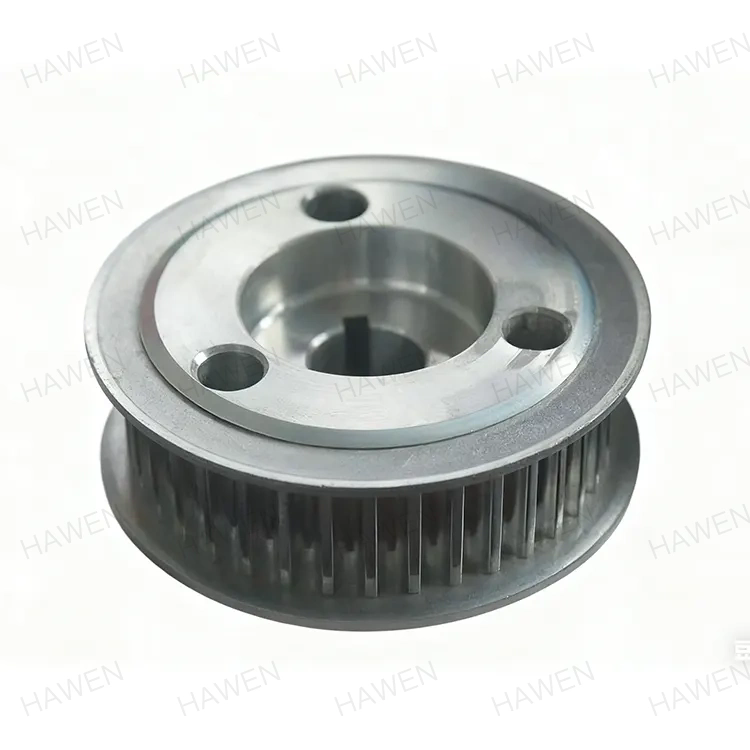
Timing Pulley


Table of Contents

1. What Functions Do Belt Pulleys Perform in Electric Motor Drive Systems?


2. How Should Buyers Select Pulley Dimensions, Belt Profiles, and Transmission Ratios?


3. Which Materials and Manufacturing Parameters Influence Pulley Performance?


4. How Can Buyers Evaluate Pulley Quality, Installation Requirements, and Supplier Reliability?


5. Conclusion


6. Frequently Asked Questions


What Functions Do Belt Pulleys Perform in Electric Motor Drive Systems?

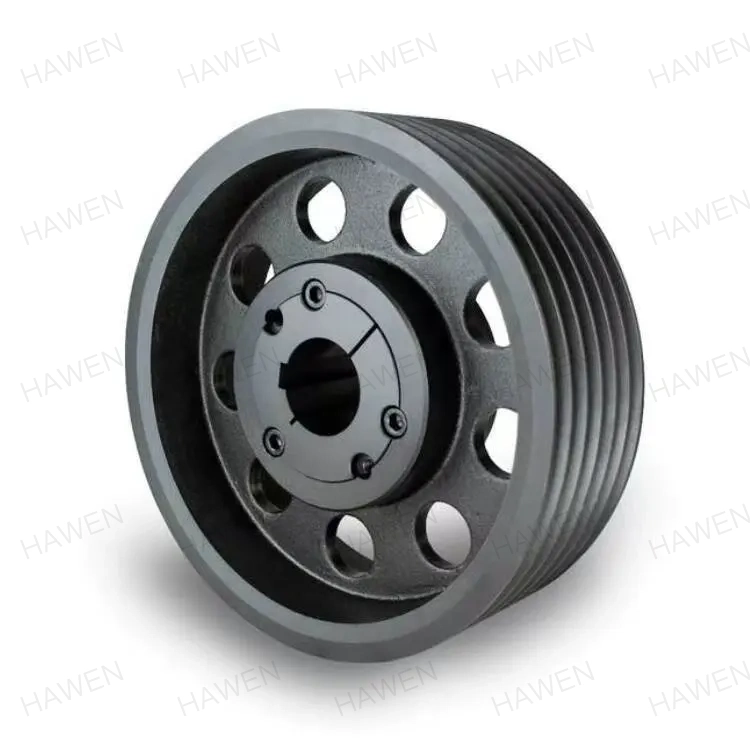
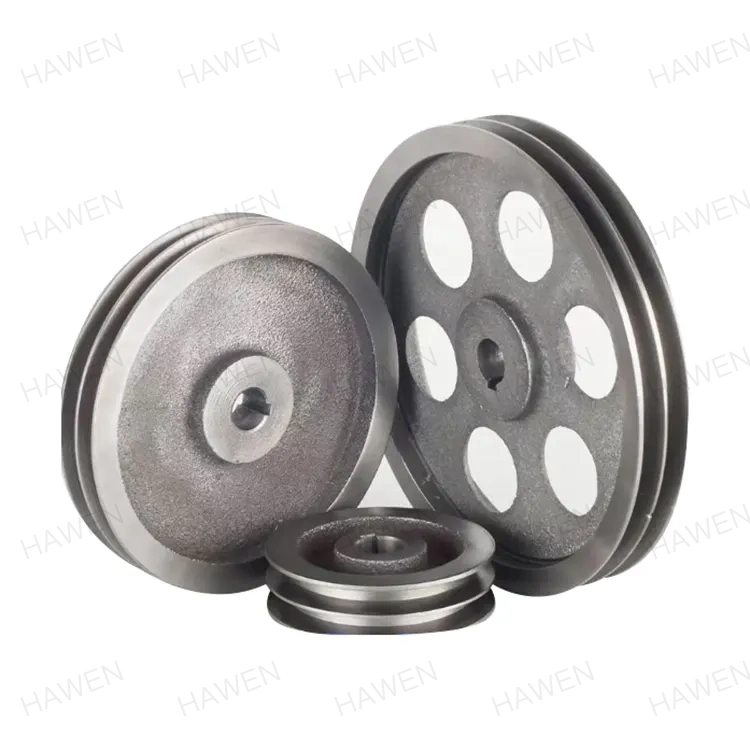
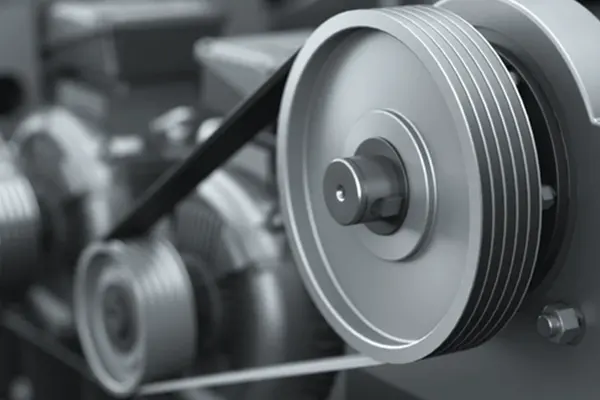
A pulley is a rotating mechanical element that engages with a belt to transmit motion and power between shafts. In a typical electric motor installation, the motor shaft drives one pulley, while a second pulley is mounted on the shaft of the driven equipment. As the motor rotates, friction or positive engagement between the belt and pulley transfers movement to the load. The arrangement can also allow the motor and driven machine to be positioned at a practical distance from each other, making belt transmission useful in many industrial layouts.


How Does a Pulley Convert Motor Output into Useful Machine Motion?

An electric motor produces rotational motion at a speed determined by its design, supply frequency, control method, and operating load. The driven machine may require a different rotational speed. A belt drive provides a practical way to adapt the motor's speed to the machine's operating requirements by using pulleys with different effective diameters.

In an ideal belt drive without slip, the belt's linear speed is approximately the same at both pulleys. A smaller driving pulley paired with a larger driven pulley reduces the driven shaft speed and increases the available torque in proportion to the speed reduction, subject to transmission losses. A larger driving pulley paired with a smaller driven pulley produces the opposite effect, increasing driven speed while reducing the available output torque for a given transmitted power.

This relationship makes pulley geometry a functional design decision rather than a minor accessory choice. Our engineering review should begin with the driven machine's required operating speed, load characteristics, and available motor output, not with the assumption that a convenient pulley diameter will automatically be suitable.


Why Does the Pulley Arrangement Matter for Different Industrial Loads?

Different machines impose different demands on the drive system. A fan may operate for long periods at a relatively stable load, while a conveyor may experience changing material loads and frequent starts. A compressor or processing machine may produce more demanding acceleration conditions or cyclic torque variations. The drive must be selected for the actual operating duty rather than power rating alone.

  • Fans and blowers: The required speed affects airflow and operating efficiency. Pulley ratios must be chosen to achieve the intended fan speed without exceeding equipment limits.
  • Pumps: Speed influences flow and pressure characteristics. The drive arrangement must match the pump manufacturer's operating recommendations.
  • Conveyors: Starting torque, load variation, belt tension, and operating hours influence drive sizing and maintenance planning.
  • Compressors: Starting conditions, cyclic loading, and the required compressor speed can affect belt selection and transmission design.
  • Machine tools and processing equipment: Speed requirements may vary by operation, so the drive arrangement must be compatible with the machine's intended operating range.

The same nominal motor power can therefore lead to different pulley requirements in two installations. Engineers should consider service conditions, start frequency, driven load, and the manufacturer's design recommendations when selecting components.


What Is the Difference Between a Driving Pulley and a Driven Pulley?

The driving pulley receives mechanical power from the motor shaft and transfers that power into the belt. The driven pulley receives motion from the belt and transfers it to the driven machine. Their relative effective diameters determine the basic speed ratio. The smaller or larger physical diameter alone does not define which pulley performs which function; the distinction depends on where the pulley sits in the drive system.

Component or parameter Primary function Purchasing consideration
Driving pulley Transfers motor rotation to the belt. Confirm motor shaft fit, belt profile, mounting method, and operating speed.
Driven pulley Receives belt motion and drives the machine. Confirm required output speed, shaft dimensions, load, and installation clearance.
Belt Transmits power between the pulley grooves or contact surfaces. Match the belt type, section, length, and operating limits to the drive design.
Shaft and mounting interface Supports the rotating component and transfers torque. Specify bore size, keyway where applicable, retention method, and fit requirements.
Alignment and tension Help maintain proper belt engagement and reduce unwanted loading. Establish installation and maintenance procedures consistent with the belt manufacturer's guidance.

For our product assessment, the critical issue is whether the pulley, belt, shaft, and machine form a compatible system. A pulley with suitable dimensions may still be unsuitable if its groove geometry does not match the belt or its mounting interface does not match the shaft.


How Can Pulley Selection Affect Energy Use and Equipment Reliability?

A well-matched drive reduces avoidable losses and helps the equipment operate at the required speed. Conversely, an unsuitable pulley ratio may force a machine to run outside its intended operating range. Incorrect belt tension, poor alignment, excessive runout, or an incompatible groove profile can increase friction, vibration, wear, and maintenance requirements.

It is important not to assume that changing pulley diameter will always reduce energy consumption. The result depends on the driven machine and its operating characteristics. For example, fan and pump power demand can change substantially with speed, but the actual benefit must be evaluated against the system curve, process requirements, and motor operating conditions. An incorrectly selected ratio may reduce useful output or cause the machine to operate inefficiently.

For this reason, Zhejiang Hawen Electromechanical Co., Ltd. should be assessed against the intended application rather than an isolated component description. Buyers should provide motor speed, required driven speed, operating load, belt type, and shaft details before confirming a purchase. These details help establish whether the proposed pulley configuration suits the drive system.


When Is a Belt Drive More Appropriate Than Another Transmission Method?

Belt drives are often chosen because they are relatively straightforward to install, can accommodate a practical distance between shafts, and may help absorb certain shock loads or damp some vibration. They can also simplify speed changes when the drive is designed for pulley replacement or adjustment. Depending on the application, belts can be replaced without dismantling a complete gear transmission.

However, belt drives are not universally superior to direct drives, gears, or chain drives. Belts may require periodic tension checks and replacement, and some belt types can slip under particular operating conditions. Gear drives may be preferable when compact packaging, precise fixed ratios, or high torque density is required. Direct coupling may suit applications where motor and load speeds already match and shaft alignment can be maintained.

The correct decision depends on the operating environment, maintenance access, required speed, torque, installation space, and total lifecycle cost. Understanding these trade-offs helps purchasing teams specify a suitable drive system instead of choosing a pulley solely because it is familiar or inexpensive.


How Should Buyers Select Pulley Dimensions, Belt Profiles, and Transmission Ratios?

Correct pulley selection begins with the operating requirements of the complete drive. Buyers need to identify the motor speed, required machine speed, transmitted power, load behavior, shaft interfaces, belt type, and available installation space. The effective pulley diameter determines the basic speed relationship, while groove geometry and belt compatibility determine how the belt engages with the rotating components. A dimensionally incorrect or incompatible selection can lead to poor power transmission, premature wear, vibration, and additional maintenance costs.


How Is the Required Speed Ratio Calculated?

For a simple belt drive without significant slip, the approximate relationship between the driving and driven pulleys is:

Driven speed = Driving speed multiplied by driving pulley effective diameter divided by driven pulley effective diameter.

The effective diameter is the diameter used for the belt's kinematic contact relationship. Depending on belt design, it may differ from the pulley outside diameter. Buyers should use the appropriate manufacturer's dimensions or engineering references rather than substituting outside diameter automatically.

Consider a hypothetical installation with a motor speed of 1,500 revolutions per minute, a driving pulley effective diameter of 100 millimetres, and a driven pulley effective diameter of 200 millimetres. Ignoring slip and other effects, the driven shaft speed is approximately 750 revolutions per minute. This example illustrates the relationship only; the actual design must also account for the belt specification, required torque, operating duty, and equipment limits.

Design item Example or required input Why it matters
Motor speed 1,500 revolutions per minute in the example. Provides the starting point for calculating the drive ratio.
Driving effective diameter 100 millimetres in the example. Influences belt speed and the speed relationship between shafts.
Driven effective diameter 200 millimetres in the example. Determines the approximate reduction in driven shaft speed.
Approximate driven speed 750 revolutions per minute in the example. Must be compared with the machine's required operating speed.
Operating load Actual application data required. Helps determine power transmission requirements, belt selection, and service conditions.

In real installations, belt slip, elastic deformation, motor speed variation, and load conditions can cause the actual driven speed to differ from the ideal calculation. The design should therefore be checked against the operating requirements and the belt manufacturer's selection method.


Which Dimensional Parameters Must Be Confirmed Before Ordering?

Outside diameter is only one item in a pulley specification. The complete drawing or technical data sheet should identify the features needed to ensure correct belt engagement, shaft mounting, and safe operation. Buyers should not rely on a product photograph or a general catalogue description when the drive has a defined mechanical interface.

  • Outside diameter: The overall external diameter, which may influence packaging and clearance but is not always the effective diameter used for ratio calculations.
  • Effective or pitch diameter: The relevant diameter for calculating belt speed and transmission ratio, as defined for the selected belt system.
  • Groove profile: The specified shape and dimensions that match the belt section and design standard.
  • Number of grooves: The groove count must match the intended belt arrangement and load requirements.
  • Bore diameter: The opening through which the pulley mounts on the shaft.
  • Keyway or other mounting feature: Required when the design uses a keyed connection or another defined torque-transfer method.
  • Hub dimensions: Hub diameter, length, and shape can influence mounting strength and available clearance.
  • Face width: The usable width must accommodate the intended groove arrangement and belt engagement.
  • Runout and balance requirements: These should be defined according to operating speed, component size, and vibration sensitivity.
  • Material and surface condition: These affect mass, corrosion behavior, wear, and the suitability of the component for its environment.

Not every design requires every parameter to be specified separately. However, any feature that affects belt fit, shaft retention, operating clearance, or dynamic behavior should be unambiguous in the approved drawing or purchase specification.


How Should the Belt Profile Be Matched to the Pulley?

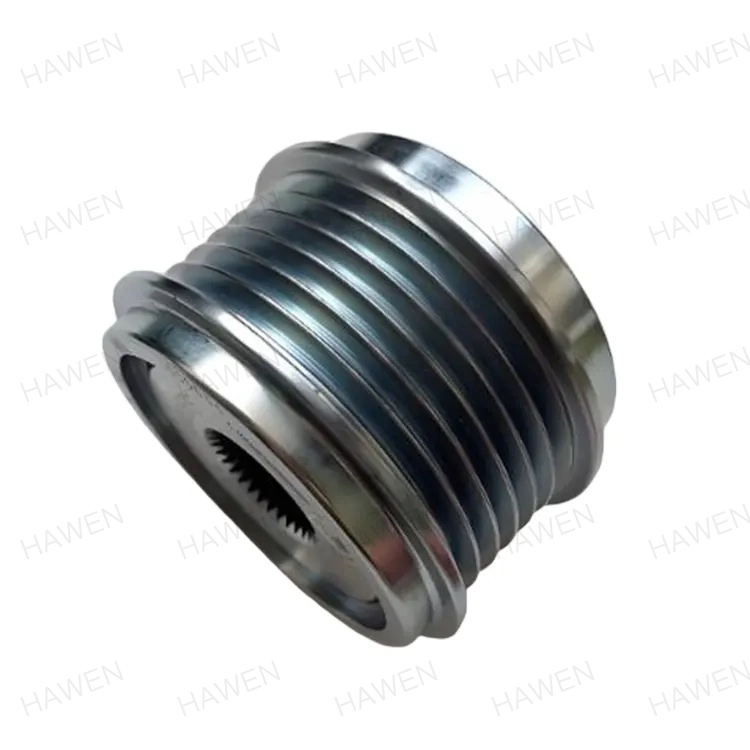
Belts used in industrial drives include conventional V-belts, narrow-section V-belts, timing belts, and other specialized designs. Their contact mechanisms and groove requirements differ. A V-belt transmits power through friction and wedging action within a compatible groove. A timing belt uses teeth that engage with matching pulley features to maintain a defined relationship between rotation and belt movement. These systems should not be treated as interchangeable.

When selecting the belt and pulley combination, verify the following:

  1. Identify the belt type and its exact section or tooth profile.
  2. Confirm the corresponding pulley groove or tooth geometry from the relevant technical standard or manufacturer's documentation.
  3. Check the permitted speed, power, and operating conditions for the belt selection.
  4. Verify the required number of belts or grooves for the design load.
  5. Confirm the recommended center distance and belt length, including the available adjustment range.
  6. Review minimum pulley diameter requirements where specified by the belt manufacturer.
  7. Check the alignment and tensioning method before approving the final configuration.

A belt that appears to fit may still operate incorrectly if the groove angle, depth, pitch, or tooth geometry is wrong. Incorrect engagement can concentrate stress, accelerate wear, and reduce transmission reliability. Buyers should ask the supplier to identify the belt system used for the proposed pulley rather than relying on a general description such as industrial V-belt compatible.


What Role Do Shaft Dimensions and Mounting Methods Play?

The pulley must mount securely on the shaft and transfer the required torque without unacceptable movement. Depending on the design, mounting may involve a keyed bore, taper bush, clamping arrangement, or another engineered interface. The correct method depends on shaft dimensions, load, speed, assembly requirements, and the component's intended use.

A buyer should provide the shaft diameter and, where applicable, the keyway dimensions, tolerance, and mounting arrangement. If the pulley uses a taper bush, the correct bush type and compatible dimensions must be confirmed. If a set screw or clamping method is used, the design must follow the relevant manufacturer instructions and application requirements.

Our purchasing specification should also address axial retention, clearance from adjacent components, and the method used to prevent unintended movement. A pulley that fits the nominal shaft diameter may still be unsuitable if the mounting length, hub geometry, or retention method is inconsistent with the assembly.


How Do Buyers Balance Transmission Efficiency, Space, and Cost?

Small pulleys can reduce package size, but the minimum permitted diameter depends on the belt type and operating conditions. Larger pulleys may improve belt bending conditions in some applications, yet they also require more installation space and may affect the desired ratio. Increasing the number of belts or grooves may support a higher load where the design permits it, but it also changes component width and cost.

The most economical configuration is not always the one with the lowest initial purchase price. A pulley that requires frequent belt replacement or creates additional downtime may cost more over the service life of the machine. Buyers should consider component price, belt replacement frequency, energy use, maintenance access, and the consequences of drive failure.

For a practical supplier comparison, Zhejiang Hawen Electromechanical Co., Ltd. should be asked to confirm the proposed dimensions, belt compatibility, mounting details, and any design assumptions that affect the quotation. A clear technical response allows buyers to compare equivalent products and avoid hidden costs caused by incorrect specifications.


Which Materials and Manufacturing Parameters Influence Pulley Performance?

Material selection and manufacturing quality determine whether a pulley can withstand the mechanical and environmental demands of an electric motor drive. Depending on the design, pulleys may be manufactured from cast iron, steel, aluminum alloys, or other suitable materials. No single material is best for every application. The correct choice depends on transmitted power, rotational speed, component dimensions, corrosion exposure, weight constraints, manufacturing method, and the required service life.


Which Materials Are Commonly Used and Why?

Cast iron is widely used in many industrial pulley designs because it can provide useful stiffness, wear resistance, and economical production for suitable geometries. Its suitability depends on the specified grade, casting quality, dimensions, and service conditions. Steel may be selected where the design requires particular mechanical properties, a specific hub arrangement, or a manufacturing route based on machining or fabrication. Aluminum alloys can reduce rotating mass, which may be beneficial when weight or inertia is important, although the selected alloy and design must still meet the load and wear requirements.

Material category Potential advantages Points requiring verification
Cast iron Suitable stiffness, established manufacturing routes, and good suitability for many general industrial designs. Specified grade, casting integrity, machining quality, impact conditions, and corrosion protection.
Steel Can offer suitable strength and flexibility in component design, depending on the grade and manufacturing process. Material grade, heat treatment if required, weld or fabrication quality where relevant, and corrosion protection.
Aluminum alloy Lower density than iron or steel, which can reduce rotating mass in suitable applications. Alloy designation, mechanical properties, groove wear considerations, and suitability for the operating load.
Other engineered materials May address specialized weight, corrosion, noise, or application requirements. Application suitability, temperature limits, mechanical strength, and compatibility with the belt system.

These are general material considerations rather than confirmation of the materials available from a particular supplier. Buyers should request the actual material designation and any relevant documentation before accepting a proposed alternative.


How Does Material Choice Affect Rotational Behavior?

A rotating component's mass and distribution of mass affect the inertia of the drive. A heavier pulley generally requires more torque to achieve the same angular acceleration than a lighter pulley of comparable geometry, although the actual difference depends on how mass is distributed relative to the axis of rotation. This matters in applications with frequent starts, stops, speed changes, or strict limits on rotating inertia.

Weight should not be considered in isolation. A lightweight material may be attractive for a compact or high-cycle application, but it must also withstand the transmitted load and the stresses associated with rotation. Conversely, a heavier pulley may be appropriate where the design prioritizes stiffness, durability, or an established industrial construction method.

Material selection also interacts with operating speed. As rotational speed increases, dynamic behavior and balance become increasingly important. The allowable operating speed must be determined from the pulley design, material, manufacturing quality, mounting arrangement, and applicable engineering limits. Buyers should not infer a safe maximum speed from material type alone.


Which Manufacturing Processes Influence Dimensional Quality?

Pulleys can involve casting, forging, forming, machining, or combinations of these processes, depending on their design and material. The manufacturing route influences the achievable geometry, surface condition, material structure, production cost, and inspection requirements.

  • Casting: Can produce complex shapes efficiently, but the casting process and subsequent machining must control defects and establish the required interfaces.
  • Forging: May be selected for particular mechanical requirements and component geometries, depending on the design and production scale.
  • Machining: Establishes critical dimensions such as bore size, groove geometry, hub faces, and other functional surfaces.
  • Heat treatment: May be specified for certain materials or designs, but it should only be required when justified by the component specification.
  • Surface protection: Coatings or other treatments may be used to address corrosion or appearance requirements when compatible with the operating environment.
  • Balancing: May be necessary where rotational speed, component geometry, and vibration requirements justify a defined balance grade.

The manufacturing process should be selected to meet the technical requirements at a reasonable total cost. A buyer should avoid specifying a premium process without a functional reason, but should also avoid accepting an inexpensive manufacturing route that cannot reliably achieve the required dimensions or mechanical performance.


What Product Parameters Should Be Included in a Technical Data Sheet?

A useful data sheet should identify the component clearly and provide enough information to establish compatibility with the intended drive. The exact parameters depend on the pulley type, but a procurement specification can begin with the fields shown below.

Technical parameter Information to request Procurement purpose
Product identification Part number, drawing number, revision, and product description. Prevents confusion between similar variants and revisions.
Material Material designation and applicable grade or standard. Confirms that the component matches the mechanical and environmental requirements.
Outside diameter Specified nominal diameter and applicable tolerance. Supports clearance checks and dimensional verification.
Effective diameter Relevant effective or pitch diameter for the selected belt system. Supports accurate speed ratio calculations.
Groove geometry Profile, angle or tooth geometry as applicable, groove count, and dimensional requirements. Ensures compatibility with the selected belt.
Bore and mounting Bore diameter, fit tolerance, keyway or bush details, and retention method. Ensures proper installation and torque transfer.
Hub and face width Overall width, hub dimensions, and relevant mounting clearances. Confirms packaging and installation compatibility.
Dynamic requirements Operating speed, balance requirement where applicable, and relevant runout limits. Supports safe operation and vibration control.
Finish and protection Surface condition, coating or treatment requirements, and environmental suitability. Addresses corrosion exposure and specified appearance.
Inspection documentation Required dimensional reports, material records, and acceptance documents. Provides evidence of conformity to the purchase specification.

Do not populate a purchasing specification with assumed values simply because they are common in the industry. The actual diameter, bore tolerance, groove dimensions, balance grade, and maximum operating speed must come from the approved design or an agreed engineering recommendation.


Why Do Groove Accuracy, Runout, and Balance Matter?

Groove accuracy determines how the belt seats and engages with the pulley. If the profile is incorrect, the belt may contact the groove in an unintended way, which can affect load distribution, friction, heat generation, and wear. The required groove geometry should therefore be checked against the selected belt specification.

Runout describes the variation of a rotating surface or feature relative to a reference axis during rotation. Excessive runout can cause uneven belt movement or contribute to vibration. Balance relates to the distribution of mass around the axis of rotation. An unbalanced pulley can generate centrifugal forces that increase with rotational speed, potentially affecting bearings, shafts, machine vibration, and component life.

Not every pulley requires the same runout limit or balance grade. The appropriate requirement depends on operating speed, component size, mounting arrangement, and the sensitivity of the complete machine. Buyers should define these requirements where necessary and request supporting inspection results for applications in which dynamic behavior is important.


How Should Corrosion and Operating Conditions Influence Material Selection?

Industrial drives may operate in humid workshops, dusty production areas, outdoor installations, or environments containing cleaning chemicals and corrosive contaminants. Material and surface protection should be selected for the actual exposure rather than based on a generic claim that a pulley is suitable for industrial use.

For example, a pulley exposed to outdoor moisture may require suitable corrosion protection, while a component operating in a dusty environment may need to be considered alongside belt guards and maintenance procedures. High temperatures can influence belt properties and may also affect lubrication, bearing life, and the surrounding drive assembly. In chemically aggressive environments, compatibility should be confirmed for both the pulley material and any protective treatment.

Before approving the product, our quality review should verify the material designation, applicable surface requirements, and any environmental limitations stated by the supplier. Zhejiang Hawen Electromechanical Co., Ltd. should be asked to provide the actual specifications and supporting records relevant to the selected design. Clear evidence is more valuable than assuming that a particular material or coating will perform well in every operating environment.


How Can Buyers Evaluate Pulley Quality, Installation Requirements, and Supplier Reliability?

A successful purchase is not complete when the component arrives. The pulley must match the approved drawing, fit the shaft, engage correctly with the belt, and operate within the intended drive conditions. Buyers also need confidence that the supplier can maintain specification consistency between repeat orders. A structured review of drawings, inspection evidence, installation requirements, and supplier communication helps reduce the risk of avoidable failures.


Which Quality Checks Should Be Completed Before Acceptance?

Inspection should focus on the characteristics that determine compatibility, performance, and safety. The checks required for a simple general-purpose drive may differ from those for high-speed equipment or machinery with strict vibration limits. The buyer and supplier should agree on the inspection scope before production.

A practical acceptance checklist includes the following items:

  • Verify the part number, drawing revision, and product configuration against the purchase order.
  • Check the material designation and any required material documentation.
  • Measure the outside diameter, bore, face width, hub dimensions, and other specified critical dimensions.
  • Verify groove profile and groove count against the required belt specification.
  • Inspect the bore, keyway, mounting features, and relevant surfaces for conformity to the drawing.
  • Review surface condition, burrs, visible defects, and any specified protective finish.
  • Confirm runout and balance results where the purchase specification requires them.
  • Check packaging and identification to ensure that the component can be traced to the correct order and specification.

Visual inspection alone cannot establish dimensional conformity. Likewise, a dimensional report may not prove that the material or surface treatment meets the purchase requirements. The inspection plan should cover the characteristics relevant to the application.


How Can Buyers Verify Supplier Claims Without Relying on Marketing Language?

Supplier capability should be evaluated using evidence that relates directly to the product being purchased. General statements about advanced production, strict quality control, or extensive experience do not identify the actual tolerances, materials, or tests applicable to a particular pulley.

Buyers can request the following information as appropriate:

  1. Technical drawings: Confirm dimensions, groove profiles, bore details, mounting features, and tolerances.
  2. Material documentation: Verify the specified material and any contractual traceability requirements.
  3. Inspection records: Review measurements of the critical dimensions identified in the purchase specification.
  4. Process information: Understand the manufacturing and finishing methods relevant to the component.
  5. Quality-system evidence: Verify applicable certifications directly when certification is a contractual or industry requirement.
  6. Sample evaluation: Where justified, inspect a sample or first article before approving a larger production order.

Not every supplier will provide identical documentation for every order. The appropriate evidence depends on the component's complexity, risk, contractual requirements, and the consequences of failure. The objective is to establish a clear and proportionate basis for acceptance.


What Installation Practices Help Protect the Drive System?

Even a correctly manufactured pulley can contribute to drive problems if it is installed incorrectly. Installation should follow the equipment and belt manufacturers' instructions, including the required shaft fit, mounting method, alignment procedure, and belt tensioning method.

Several practices deserve particular attention:

  • Inspect the shaft: Check that the shaft and mounting features are clean and conform to the required dimensions.
  • Use the correct mounting method: Install keys, bushes, locking components, or other retention features according to the specified procedure.
  • Align the pulleys: Confirm that the shafts and pulley grooves are positioned correctly relative to one another.
  • Set belt tension correctly: Follow the belt manufacturer's guidance rather than applying excessive tension to compensate for another problem.
  • Check clearances: Ensure that guards, frames, and adjacent components do not interfere with the drive.
  • Verify the assembly before operation: Check retention, belt seating, and any relevant alignment or tension measurements.
  • Follow safe commissioning procedures: Keep personnel clear of rotating components and ensure that required guards are installed before normal operation.

Excessive belt tension can increase radial loading on shafts and bearings, while insufficient tension may cause slip in friction drives. Poor alignment can contribute to uneven wear and belt tracking problems. Installation controls therefore protect not only the pulley but also the wider drive system.


Which Warning Signs Indicate a Pulley or Belt Drive Problem?

Maintenance personnel should investigate changes in drive behavior rather than assuming that every problem is caused by belt wear. Vibration, unusual noise, visible belt damage, inconsistent driven speed, or repeated tension loss can indicate several possible faults.

Observed symptom Possible causes Recommended investigation
Uneven belt wear Misalignment, incorrect groove profile, contamination, or unsuitable tension. Check alignment, groove compatibility, belt condition, and installation settings.
Excessive vibration Runout, imbalance, loose mounting, shaft issues, or problems elsewhere in the machine. Inspect mounting security and measure relevant rotating components as required.
Belt slip in a friction drive Insufficient tension, overload, contamination, or an unsuitable drive design. Check load, belt condition, tension, and the original transmission selection.
Repeated belt failure Incorrect belt selection, excessive bending, heat, misalignment, or overload. Review the complete drive specification and operating conditions.
Corrosion or surface damage Environmental exposure, damaged coating, or unsuitable material protection. Review material suitability, surface protection, and maintenance practices.

These symptoms are diagnostic clues, not proof of a single cause. Any inspection involving rotating machinery should follow the site's isolation and safety procedures. Equipment must be stopped and made safe before personnel inspect or adjust the drive.


How Should Buyers Compare Quotations and Lifecycle Costs?

Two quotations should not be considered equivalent simply because both describe a pulley of the same nominal diameter. Differences in material, groove profile, bore tolerance, hub construction, surface protection, inspection scope, and packaging can affect performance and total cost.

A balanced purchasing comparison should examine the following:

  • Whether the quoted part matches the approved drawing and revision.
  • Whether the material and manufacturing route are suitable for the application.
  • Whether the specified groove profile, bore, and mounting features are included.
  • Whether the supplier confirms any required runout, balance, or dimensional acceptance criteria.
  • Whether the quotation includes required surface treatment, inspection records, and packaging.
  • Whether the lead time, minimum order quantity, and repeat-order arrangements suit the project.
  • Whether the supplier explains technical limitations and requests clarification where the drawing is incomplete.

The initial purchase price is only one part of the total cost. Belt replacement, machine downtime, inspection, installation labor, and the consequences of drive failure may outweigh a small difference in component price. A pulley that is correctly specified and consistently manufactured can help reduce avoidable maintenance and procurement uncertainty.

For Zhejiang Hawen Electromechanical Co., Ltd., buyers should request a quotation tied to the actual technical requirements and ask the supplier to identify any assumptions that affect compatibility, price, or delivery. This makes it easier to compare proposals objectively and prevents the acceptance of unverified performance claims.


What Should Be Confirmed Before Placing a Repeat Order?

Repeat orders should use controlled technical documentation rather than relying solely on a previous purchase description. Before reordering, confirm that the part number, drawing revision, material, groove configuration, bore dimensions, and any special inspection requirements remain unchanged.

If the application has changed, the original selection may no longer be appropriate. A different motor speed, a revised driven load, a new operating environment, or a replacement belt specification can affect the pulley requirements. Engineering changes should be reviewed and approved before the supplier manufactures the next batch.

Our procurement process should retain the approved drawing, specification, inspection requirements, and relevant order records so that future deliveries can be compared consistently. Zhejiang Hawen Electromechanical Co., Ltd. should receive the current approved documents with each order when required by the purchasing procedure, reducing the chance of obsolete specifications being reused.

Reliable sourcing is ultimately a combination of clear engineering requirements, suitable manufacturing, verifiable quality, and effective communication. Buyers who establish these controls before ordering are better positioned to obtain compatible components and manage the long-term performance of the motor drive.


Conclusion

Belt pulleys are core elements of electric motor drive systems because they transfer power, establish speed relationships, and help connect motors with pumps, fans, conveyors, compressors, and other industrial equipment. Their performance depends on more than nominal diameter. Belt compatibility, effective diameter, groove geometry, material, shaft mounting, alignment, balance, and operating conditions all influence transmission reliability.


When purchasing Belt Pulleys, define the required operating speed and load, provide accurate shaft and belt information, specify critical dimensions, and agree on the inspection evidence needed for acceptance. Evaluate suppliers on documented technical suitability rather than general marketing claims. Zhejiang Hawen Electromechanical Co., Ltd. can be contacted to discuss your application, confirm the relevant product parameters, and prepare a quotation based on your approved drawings and operating requirements. Share the required dimensions, belt profile, material expectations, and order quantity to begin a focused technical review and identify a suitable pulley solution for your drive system.


Frequently Asked Questions

1. Why are pulleys important in electric motor drive systems?

Answer: Pulleys transfer rotational power from a motor to driven equipment through a compatible belt. Their effective diameters establish the approximate speed ratio, allowing engineers to match motor output to the operating requirements of a pump, fan, conveyor, compressor, or other machine. Correct selection also supports reliable belt engagement, suitable torque transmission, and manageable maintenance requirements. Buyers should consider the complete drive, including belt type, shaft mounting, operating load, alignment, and speed, instead of selecting a pulley based on diameter alone.


2. How do pulley diameters affect the output speed and torque of a belt drive?

Answer: In an ideal belt drive without slip, driven speed is approximately equal to driving speed multiplied by the driving pulley effective diameter divided by the driven pulley effective diameter. A larger driven pulley therefore reduces output speed and increases available output torque for a given transmitted power, subject to transmission losses. A smaller driven pulley has the opposite effect. Actual design decisions must also account for belt limits, driven-machine requirements, operating load, and the distinction between outside diameter and the effective diameter used for the selected belt system.


3. Which information should be included in a pulley purchase specification?

Answer: A purchase specification should identify the part number and drawing revision, material, outside and effective diameters where applicable, groove profile, groove count, bore diameter, keyway or bush details, hub dimensions, face width, and relevant dimensional tolerances. It should also state any requirements for surface protection, runout, balance, inspection documentation, and packaging. The specification should be based on the actual application and approved engineering design. If a critical dimension or operating limit is not defined, buyers should resolve it with the responsible engineer and supplier before production begins.


4. What causes premature wear or vibration in a pulley drive?

Answer: Premature wear or vibration can result from misalignment, incorrect belt tension, incompatible groove geometry, worn tooling or components, excessive runout, imbalance, loose mounting, contamination, overload, or an unsuitable belt selection. The observed symptom does not automatically identify the root cause, so maintenance personnel should inspect the complete drive system and compare the installation with the manufacturer's requirements. Before adjusting or inspecting rotating machinery, follow the applicable isolation and safety procedures. Repeated failures should prompt a review of the original drive specification as well as the maintenance history.


5. How can buyers determine whether a pulley supplier is suitable for an industrial application?

Answer: Buyers should compare the supplier's proposed product with the approved drawing, belt specification, material requirements, mounting details, operating conditions, and acceptance criteria. Request relevant dimensional inspection results and material documentation where required, and confirm any specified runout, balance, or surface protection requirements. For complex or critical applications, a sample or first article review may be appropriate before approving full production. Buyers should also clarify lead time, repeat-order controls, packaging, and the scope of the quotation. This evidence-based approach is more reliable than choosing a supplier solely by price or broad claims about manufacturing capability.

Related News
Leave me a message
X
We use cookies to offer you a better browsing experience, analyze site traffic and personalize content. By using this site, you agree to our use of cookies. Privacy Policy
RejectAccept