News

How Can an Automotive Timing Pulley Improve Precision, Reliability, and Efficiency in Modern Vehicles

2026-08-25 0 Leave me a message

Abstract: An Automotive Timing Pulley is a critical mechanical component in timing-belt transmission systems, where accurate tooth engagement helps maintain a stable transmission ratio and synchronized motion. For automotive manufacturers and component buyers, pulley accuracy, material selection, surface treatment, durability, and manufacturing consistency directly influence system reliability. This guide explains how automotive timing pulleys work, what specifications matter, and why precision manufacturing is essential when selecting a China manufacturer or supplier.

Automotive Timing Pulley

Table of Contents


What Is an Automotive Timing Pulley?

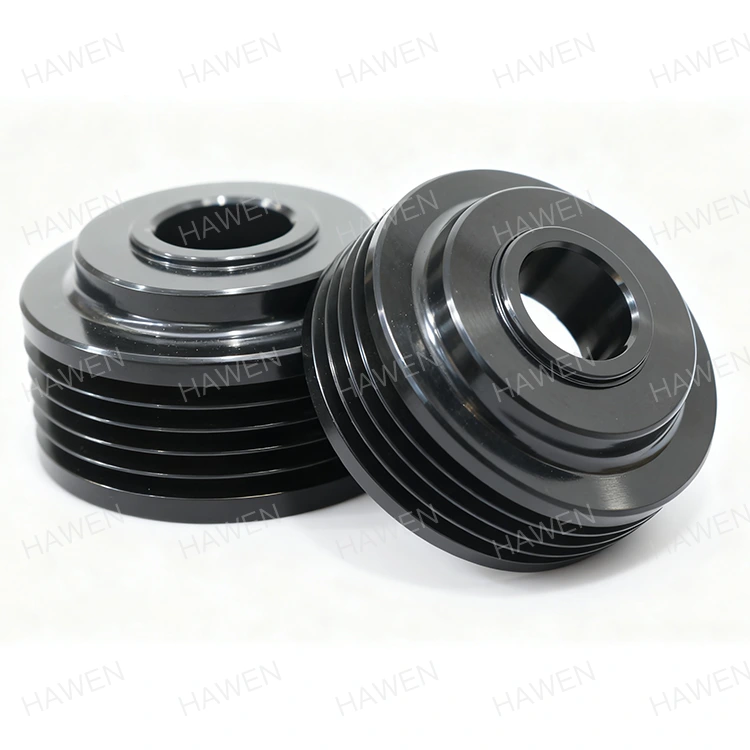
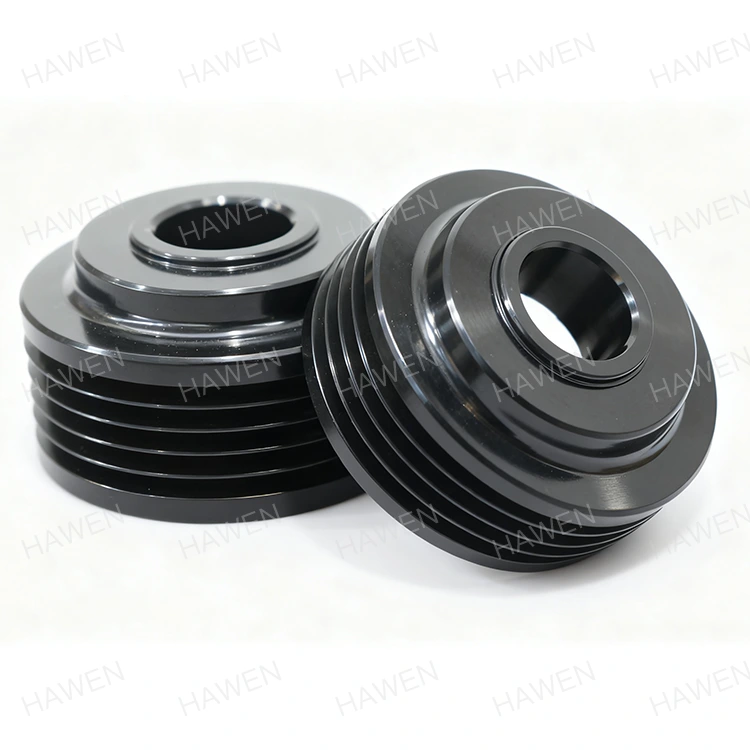
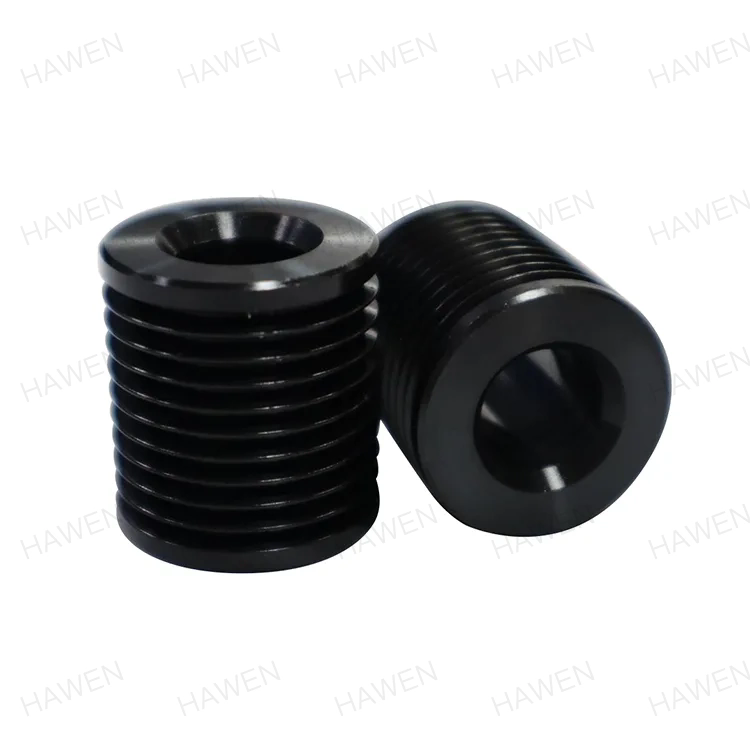
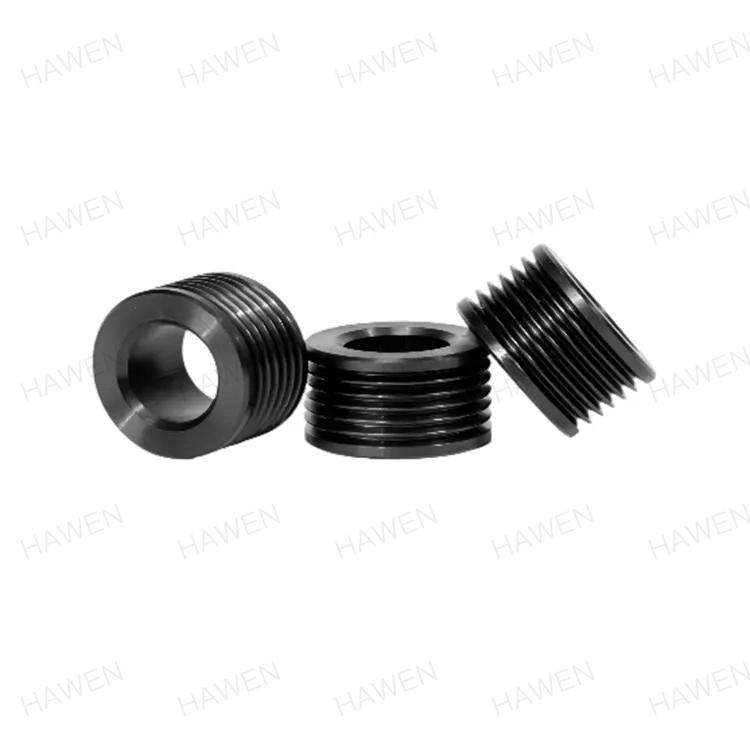
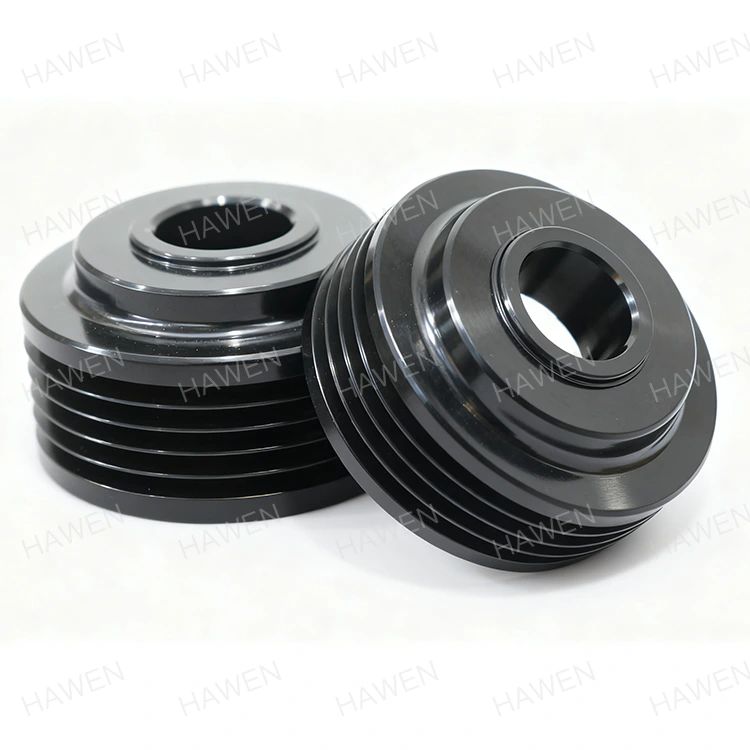
HAWEN Automotive Timing Pulley is a precision mechanical component designed for timing-belt transmission. Its toothed profile meshes with the corresponding timing belt to transfer rotational power while maintaining a consistent transmission ratio. Unlike friction-based pulley systems, the positive tooth engagement helps minimize slipping and supports synchronized movement.

In automotive systems, timing pulleys can be used in transmission arrangements associated with components such as generators and other belt-driven assemblies. The pulley must maintain dimensional stability under continuous rotation, vibration, temperature variation, and mechanical loads.

HAWEN's automotive timing pulley is manufactured from 45# carbon steel and is specified at approximately Φ71 × 45.6 mm, with mechanical machining and electrophoresis surface treatment. The product is designed for automotive motor applications and can be customized according to customer drawings.


Why Does Precision Matter in Automotive Timing Pulley Performance?

Precision is one of the most important factors when purchasing an automotive timing pulley because even a small dimensional deviation can influence belt engagement, vibration, noise, and service life.

For example, HAWEN specifies an automotive timing pulley machining accuracy of ≤0.05 mm for its listed product configuration. Its technical standards further target an inner bore tolerance of ≤0.03 mm, tooth profile angle of ±0.5°, tooth profile runout of ≤0.10 mm, and face perpendicularity of ≤0.01 mm.

Performance Factor Why It Matters Potential Benefit
Inner Bore Tolerance Controls shaft-to-pulley fit Stable rotation and reduced vibration
Tooth Profile Accuracy Ensures reliable belt engagement Consistent power transmission
Tooth Profile Runout Influences rotational consistency Lower vibration and improved service life
Face Perpendicularity Supports proper alignment More stable belt tracking
Corrosion Resistance Protects the metal surface Better durability in demanding environments

For automotive component manufacturers, precision should therefore be evaluated as a complete manufacturing capability rather than as a single dimensional specification.


What Key Specifications Should Buyers Evaluate?

When sourcing an automotive timing pulley, buyers should evaluate the entire technical specification rather than focusing only on external dimensions.

  • Material: Confirm the steel or alloy grade and whether it matches the required mechanical load.
  • Dimensions: Check outside diameter, width, bore diameter, tooth geometry, and mounting configuration.
  • Machining tolerance: Review bore tolerance, runout, perpendicularity, and tooth profile accuracy.
  • Surface treatment: Select electrophoresis, zinc plating, nickel plating, black oxide, or another suitable treatment according to the working environment.
  • Dynamic performance: Consider vibration, noise, rotational speed, and balance requirements.
  • Customization: Verify whether the manufacturer can work from drawings, samples, or application-specific specifications.
  • Quality control: Ask about online inspection, outgoing inspection, traceability, and production consistency.

A reliable supplier should also be able to explain how each specification is controlled during machining and inspection, rather than simply providing a final dimensional sheet.


Which Materials Are Suitable for Automotive Timing Pulleys?

Material selection directly affects strength, machinability, wear resistance, weight, and long-term durability. HAWEN's automotive timing pulley uses 45# carbon steel, a medium-carbon structural steel commonly selected when a balance of strength and machinability is required.

According to HAWEN's technical information, 45# carbon steel has a density of approximately 7.85 g/cm³, tensile strength of at least 600 MPa, yield strength of at least 355 MPa, elongation of at least 16%, and reduction of area of at least 40%. Its mechanical performance can also be optimized through suitable heat-treatment processes.

Material Consideration Key Characteristic Typical Selection Reason
45# Carbon Steel Strength and balanced machinability Suitable for demanding mechanical transmission components
Free-Cutting Steel Good machining performance Useful for high-volume precision production
Aluminum Alloy Lower density Useful where weight reduction is important

The best material depends on load, rotational speed, operating temperature, environmental exposure, manufacturing volume, and the customer's system design.


How Is an Automotive Timing Pulley Manufactured?

High-performance pulleys require more than conventional turning or milling. The manufacturing process must control material consistency, tooth geometry, bore accuracy, surface condition, and final inspection.

  1. Material preparation: Raw material is selected and controlled according to the required specification.
  2. Precision machining: CNC and other high-precision equipment are used to form critical dimensions.
  3. Tooth profile processing: The pulley teeth are produced according to the required belt profile and dimensional tolerances.
  4. Surface treatment: Electrophoresis or other treatments can improve corrosion resistance and surface durability.
  5. Online inspection: Critical production parameters are monitored during manufacturing to reduce dimensional variation.
  6. Final inspection: Finished components undergo outgoing inspection before shipment.

HAWEN reports a highly automated manufacturing platform with multiple automated production lines, online inspection systems, and 100% outgoing inspection. Its reported production yield is 99.995%, while the company states that critical inner-bore tolerances can be maintained at ≤0.005 mm on its broader automated manufacturing platform.


Where Are Automotive Timing Pulleys Used?

The primary value of a timing pulley is its ability to transfer motion through positive tooth engagement. This makes it appropriate for systems where synchronized transmission is more important than simple friction-based power transfer.

Automotive applications can include belt-driven systems associated with:

  • Automotive generators
  • Automotive motor transmission systems
  • Engine-related belt transmission assemblies
  • Air-conditioning compressor systems
  • Other precision belt-driven automotive components

Beyond automotive applications, precision timing pulleys can also be used in 3C testing equipment, semiconductor equipment, CNC machinery, printing equipment, textile machinery, and automated production systems.


Why Choose HAWEN for Automotive Timing Pulley Manufacturing?

For OEMs and industrial buyers, choosing an Automotive Timing Pulley manufacturer should involve more than comparing unit prices. Engineering capability, production capacity, quality assurance, customization, and delivery stability can have a significant effect on total procurement cost.

Engineering and Customization Capability

HAWEN has more than 20 years of experience in timing pulley R&D and production and has manufactured timing pulleys for automotive, home-appliance, AGV, and other applications since 2005. The company supports customized and special-shaped designs based on customer drawings and application requirements.

Automated Production and Quality Management

HAWEN combines automated production equipment with online inspection to improve batch consistency. Its manufacturing approach focuses on controlling critical dimensions and reducing variability caused by manual operations.

Environmental and Quality Compliance

The company states that its products comply with RoHS, REACH, and other international environmental requirements. HAWEN also reports ISO9001 and IATF16949 quality system certifications, providing additional support for automotive-oriented quality management and traceability.

Flexible Production Capacity

HAWEN reports total monthly capacity of approximately 5 million units, with current monthly shipments of around 3–4 million units and 40%–60% flexible capacity. Such capacity flexibility can be valuable for customers moving from prototype development to stable mass production.


How Should Buyers Select the Right Automotive Timing Pulley?

A practical sourcing process should connect the pulley specification with the actual transmission system. Before placing an order, buyers should confirm the following:

  • Timing belt type and tooth profile
  • Required pulley diameter and width
  • Shaft diameter and bore configuration
  • Required material and heat-treatment condition
  • Rotational speed and transmitted load
  • Allowable runout and perpendicularity
  • Required surface treatment and corrosion resistance
  • Expected service environment
  • Annual or monthly purchasing volume
  • Drawing, prototype, and mass-production requirements

For customized automotive timing pulley projects, providing a technical drawing, belt specification, operating conditions, and expected production volume can help a manufacturer evaluate feasibility more accurately and reduce unnecessary design changes.

For buyers seeking a custom Automotive Timing Pulley, HAWEN offers drawing-based customization and application-oriented engineering support.


Frequently Asked Questions About Automotive Timing Pulleys

What does an automotive timing pulley do?

An automotive timing pulley transfers rotational power through toothed engagement with a timing belt. This positive engagement helps maintain a stable transmission ratio and synchronized movement.

What material does HAWEN use for its automotive timing pulley?

HAWEN's listed automotive timing pulley uses 45# carbon steel and features electrophoresis surface treatment. The specific material and treatment can be discussed according to application and drawing requirements.

Can an automotive timing pulley be customized?

Yes. HAWEN supports customization according to customer drawings and can provide special-shaped designs based on specific industrial system requirements.

Why is pulley tooth accuracy important?

Accurate tooth geometry helps maintain proper engagement between the pulley and timing belt. Poor tooth accuracy can contribute to vibration, noise, uneven wear, and unstable transmission performance.

What surface treatments are available?

HAWEN uses electrophoresis for the listed automotive timing pulley and states that other treatments, including general electroplating, galvanizing, and nickel plating, can also be customized according to customer requirements.


Conclusion

A high-quality Automotive Timing Pulley is not simply a toothed wheel; it is a precision transmission component that influences synchronization, noise, efficiency, durability, and overall system reliability. For OEMs and procurement teams, the ideal China manufacturer or supplier should combine accurate machining, appropriate material selection, controlled surface treatment, automated inspection, customization capability, and stable production capacity. With more than two decades of relevant manufacturing experience and application-focused engineering capabilities, HAWEN provides a practical option for automotive timing pulley development and volume production. If you are evaluating a new project, have a drawing to review, or need a customized transmission solution, contact us to discuss your requirements with the HAWEN engineering team.

Related News
Leave me a message
X
We use cookies to offer you a better browsing experience, analyze site traffic and personalize content. By using this site, you agree to our use of cookies.Privacy Policy