News

How Can Balance Weight For Rotor Balancing Improve Motor Performance and Reliability

2026-08-17 0 Leave me a message

Abstract: Rotor imbalance can create vibration, noise, mechanical stress, and reduced operating stability in rotating motor systems. Balance Weight For Rotor Balancing provides a practical way to compensate for uneven mass distribution and improve rotational performance. This article explains how balance weights work, why brass is widely suitable for precision balancing components, what quality factors buyers should evaluate, and how customized solutions from HAWEN can support reliable motor manufacturing.

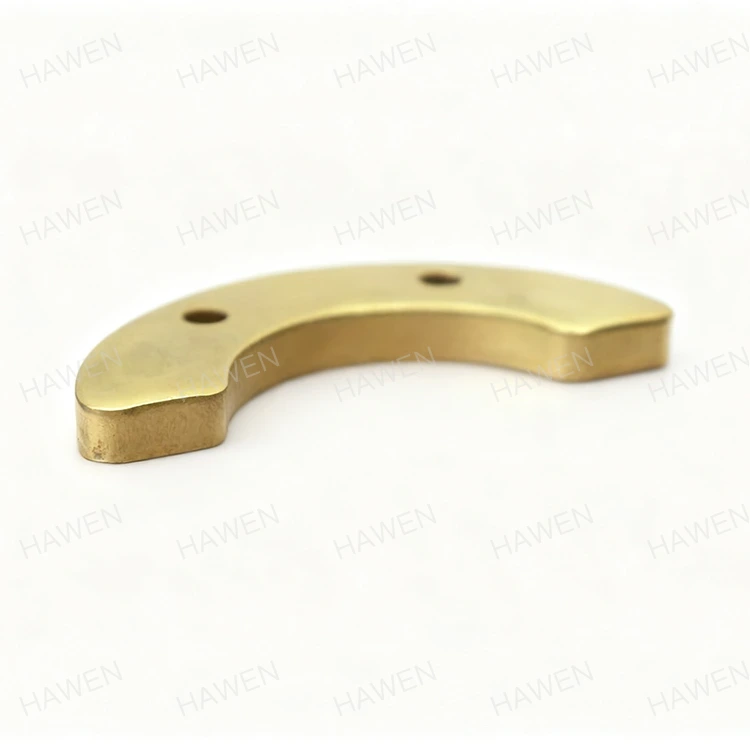
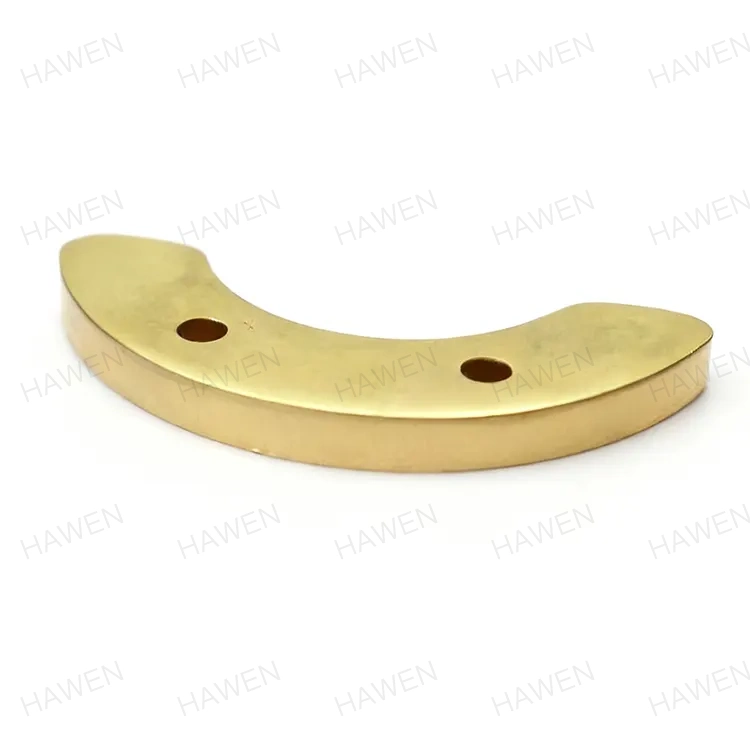
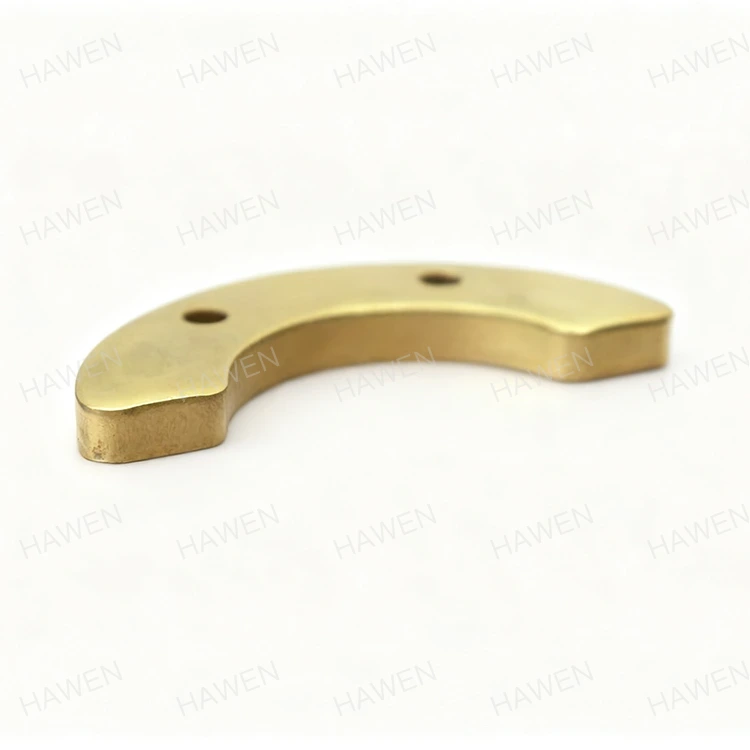
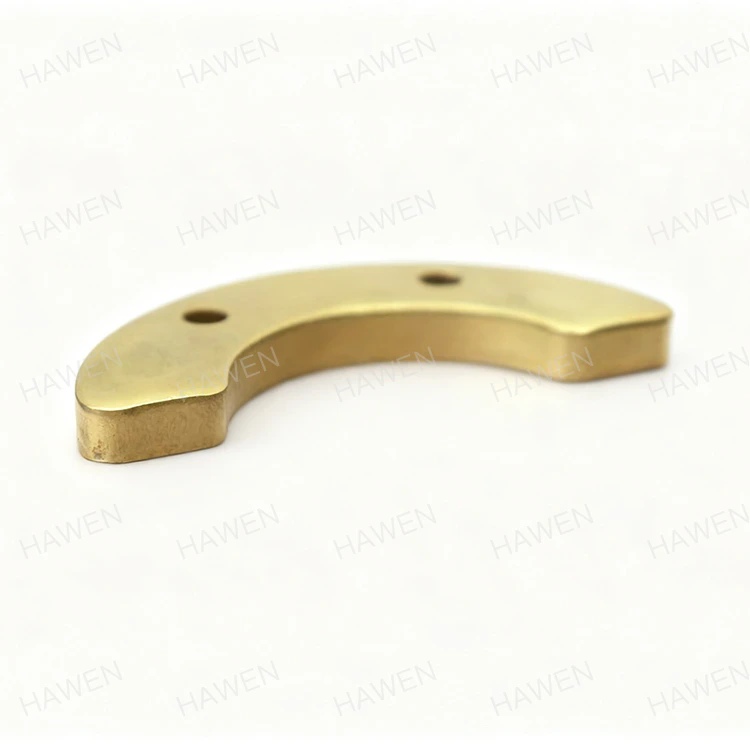
Balance Weight For Rotor Balancing

Table of Contents

1. Why Is Rotor Balancing Important?

2. How Does Balance Weight For Rotor Balancing Work?

3. What Features Should a High-Quality Balance Weight Have?

4. Why Is Brass Suitable for Rotor Balance Weights?

5. Where Are Rotor Balance Weights Commonly Used?

6. What Quality Factors Should Buyers Evaluate?

7. Why Choose HAWEN for Customized Rotor Balance Weights?

8. Frequently Asked Questions

9. Conclusion


Why Is Rotor Balancing Important?

In any rotating motor, the mass of the rotor should be distributed as evenly as possible around its rotational axis. Manufacturing tolerances, material variation, machining deviations, assembly conditions, and long-term operating wear can create uneven mass distribution. At higher rotational speeds, even a relatively small imbalance can generate centrifugal forces that contribute to vibration and noise.

This is why Balance Weight For Rotor Balancing is an important precision component for motor manufacturers. By adding a carefully controlled amount of mass at a specified position, engineers can compensate for an existing imbalance and improve the dynamic balance of the rotor.

Effective rotor balancing can provide several practical benefits:

  • Reduced vibration during motor operation
  • Lower operating noise
  • More stable rotational performance
  • Reduced mechanical stress on associated components
  • Improved bearing and assembly reliability
  • Better consistency in mass-produced motor assemblies

Rotor balancing is therefore not simply a finishing operation. It can be an important part of achieving consistent motor performance and long-term reliability.


How Does Balance Weight For Rotor Balancing Work?

A rotor balance weight works by modifying the mass distribution of a rotating assembly. During balancing, engineers determine the magnitude and angular position of the existing unbalance and then select an appropriate correction weight and installation position.

For precision balancing, the correction mass must be considered together with its distance from the rotational centerline. The resulting correction depends on the rotor design, balancing method, operating speed, and permissible residual unbalance.

A typical balancing workflow includes:

  1. Initial measurement: The rotor is evaluated to identify vibration amplitude and phase.
  2. Unbalance analysis: The direction and magnitude of the imbalance are determined.
  3. Weight selection: A suitable correction mass is selected according to the balancing calculation.
  4. Position determination: The correction weight is positioned at the required angular or radial location.
  5. Verification: The rotor is tested again to confirm that the required balance condition has been achieved.

In more advanced balancing procedures, vibration measurements and trial-weight responses can be used to calculate correction weights. The influence-coefficient approach, for example, relates measured vibration changes to known weight changes and can help determine an appropriate final correction.

This makes dimensional consistency and weight consistency especially important when purchasing balance components for production motor assemblies.


What Features Should a High-Quality Balance Weight Have?

A balance weight may be small compared with the overall motor assembly, but its manufacturing quality can directly affect balancing results. A reliable component should therefore combine controlled weight, dimensional accuracy, suitable material properties, and dependable assembly compatibility.

Key Factor Why It Matters Expected Benefit
Weight Consistency Variation in component mass can influence the final balancing result. More predictable rotor balancing
Dimensional Accuracy Correct dimensions support proper installation according to the drawing. Reliable assembly compatibility
Material Stability Material density affects the relationship between weight and physical size. Consistent balancing performance
Surface Quality Controlled surfaces can support durability and handling during assembly. Improved manufacturing reliability
Production Consistency Stable processes are essential for high-volume motor production. Lower batch-to-batch variation

For manufacturers, these characteristics are particularly important when balance weights are integrated into large-volume motor production. A component that performs consistently across batches can help reduce balancing adjustments and improve overall production stability.


Why Is Brass Suitable for Rotor Balance Weights?

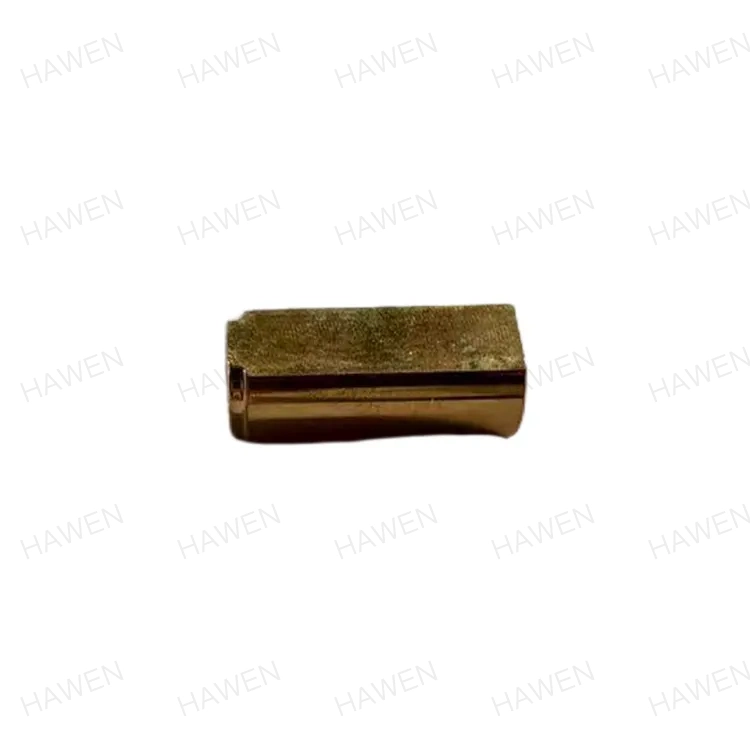
Material selection is a key consideration when developing a balance component. HAWEN uses brass for its Balance Weight For Rotor Balancing because brass combines suitable density, good machinability, plasticity, and corrosion resistance for this type of precision application.

Brass is primarily an alloy of copper and zinc, and its properties can vary according to alloy composition and microstructure. For balance components, however, the important consideration is not simply mechanical strength. The material must also support consistent mass distribution and efficient manufacturing.

Property Brass Typical Advantage for Balance Components
Density Suitable for compact correction masses Supports controlled weight distribution
Machinability Generally good Supports precision manufacturing
Plasticity Suitable for forming processes Helps maintain production consistency
Corrosion Resistance Good natural resistance Supports long-term component reliability
Manufacturing Adaptability Suitable for customized components Allows different designs and specifications

Compared with materials selected primarily for structural strength, brass can offer a useful combination of density and processing characteristics for precision balancing applications. HAWEN also provides customized surface treatment options, including electrophoresis and spray coating, when required by the application.


Where Are Rotor Balance Weights Commonly Used?

Balance Weight For Rotor Balancing can be applied to different rotating motor systems where accurate mass distribution is important. According to HAWEN's product information, the component is particularly relevant to small home appliance motors and universal motors.

Home Appliance Motors

Household appliances often require motors that operate smoothly and quietly for extended periods. Washing machine motors and other small motor systems can benefit from effective rotor balancing because excessive vibration can influence both user experience and component durability.

Universal Motors

Universal motors operate at relatively high rotational speeds in many applications. Proper balancing can help control vibration and contribute to smoother operation.

Customized Motor Assemblies

Different motor manufacturers may have different rotor geometries, mounting methods, and balancing requirements. A customized balance component produced according to engineering drawings can therefore be more appropriate than a generic component.

For buyers, the most important point is to match the balance weight with the actual rotor design, including installation location, dimensions, material requirements, and balancing specifications.


What Quality Factors Should Buyers Evaluate?

When sourcing rotor balance components from a China manufacturer or supplier, buyers should evaluate more than the unit price. Because balance weights directly influence mass distribution, manufacturing consistency is closely connected with the final balancing result.

Before placing an order, procurement and engineering teams should consider:

  • Material: Confirm the specified brass grade or other required material.
  • Drawings: Provide accurate dimensional drawings and tolerances.
  • Weight tolerance: Define acceptable mass variation where required.
  • Surface treatment: Specify coating or finishing requirements.
  • Production process: Ask how stamping, forming, machining, and inspection are controlled.
  • Quality inspection: Confirm dimensional and weight inspection procedures.
  • Environmental compliance: Check requirements such as RoHS and REACH where applicable.
  • Customization capability: Make sure the supplier can manufacture according to the customer's design.

HAWEN states that its quality management covers raw-material selection, production processing, process monitoring, and final inspection. Its manufacturing approach is designed to maintain stable component quality and predictable production performance.


Why Choose HAWEN for Customized Rotor Balance Weights?

For motor manufacturers, selecting a reliable supplier can be as important as selecting the component itself. HAWEN is supported by Zhejiang Telilong Precision Machinery Co., Ltd., which has been involved in precision mechanical component development and manufacturing since 2004. The company combines R&D, production, quality management, and international trade capabilities.

HAWEN's capabilities for Balance Weight For Rotor Balancing include:

  • More than 20 years of manufacturing experience in precision mechanical components and motor spare parts.
  • Customized production according to customer drawings, material specifications, processing requirements, and application conditions.
  • Controlled stamping and forming processes designed to maintain stable weight and dimensional consistency.
  • Professional engineering communication from initial product development through mass production.
  • International customer support for motor manufacturers and component buyers.
  • Environmental compliance support with products meeting stated RoHS and REACH requirements.

HAWEN also benefits from the mature manufacturing supply chain in Zhejiang, China, helping support stable production resources and flexible customer response.

For buyers who require a customized Rotor Balance Weight, providing a detailed drawing and application information can help the engineering team evaluate dimensions, material, surface treatment, and production requirements more efficiently.


Frequently Asked Questions

What is the main function of Balance Weight For Rotor Balancing?

It compensates for uneven rotor mass distribution, helping reduce vibration and noise while supporting smoother and more stable motor operation.

Which motors can use rotor balance weights?

They are commonly used in motor systems such as home appliance motors and universal motors. The actual suitability depends on the rotor design and balancing requirements.

Why does HAWEN use brass for this component?

Brass offers suitable density, good machinability, plasticity, and corrosion resistance, making it suitable for precision balance components that require consistent weight and reliable manufacturing.

Can HAWEN manufacture customized balance weights?

Yes. HAWEN supports customized production based on customer drawings, material specifications, dimensional requirements, surface treatments, and application conditions.

How does HAWEN control the quality of balance weights?

Quality control covers raw materials, production processing, process monitoring, dimensional control, weight consistency, and final inspection. These measures are intended to maintain stable product quality between production batches.

Can overseas motor manufacturers purchase from HAWEN?

Yes. HAWEN provides international trade and engineering support for global customers seeking customized precision motor components and stable supply solutions.


Conclusion

A properly engineered Balance Weight For Rotor Balancing can play an important role in controlling rotor imbalance, reducing vibration and noise, and supporting reliable motor operation. For manufacturers, the ideal component should combine consistent weight, dimensional accuracy, suitable material properties, dependable production processes, and compatibility with the specific rotor design.

With more than 20 years of precision manufacturing experience, customized engineering capabilities, brass balance component expertise, and international supply support, HAWEN can provide tailored solutions for motor manufacturers and industrial buyers. If you are sourcing reliable rotor balance components or developing a customized balancing solution, contact us today with your drawings and specifications to discuss your requirements with the HAWEN engineering team.

Related News
Leave me a message
X
We use cookies to offer you a better browsing experience, analyze site traffic and personalize content. By using this site, you agree to our use of cookies. Privacy Policy
RejectAccept