News

Why Belt Pulleys with high concentricity minimize secondary adjustment time?

2026-09-08 0 Leave me a message

In any belt-driven system—from a high-speed industrial fan to a precision conveyor line—the efficiency of the initial installation is only half the story. The other half is what happens after the system starts running: the secondary adjustments. These are the tweaks, re-alignments, and re-tensioning procedures that maintenance teams must perform to correct for runout, vibration, and belt tracking issues that become apparent only under load. In many plants, these secondary adjustments consume more labor hours than the original installation, and they are a primary source of unplanned downtime. The root cause of most of these adjustments can be traced back to a single, often overlooked, parameter: the concentricity of the Belt Pulleys themselves.


A Belt Pulley with high concentricity is one where the bore center axis and the outside diameter center axis are perfectly aligned. When a Belt Pulley has poor concentricity, the belt path is not perfectly circular. The belt will fluctuate in tension as the Belt Pulley rotates, leading to vibration, noise, uneven belt wear, and a condition known as "belt wander" or "tracking drift." Each of these issues triggers a secondary adjustment. A maintenance technician must re-align the Belt Pulley, re-tension the belt, or even replace components prematurely. Conversely, a high-concentricity Belt Pulley eliminates these causes at the source, delivering a belt drive system that runs smoothly from the start and continues to do so for its entire service life. This article will explore the mechanics of concentricity, its measurement, the manufacturing processes that achieve it, and the quantifiable impact it has on reducing secondary adjustment time.

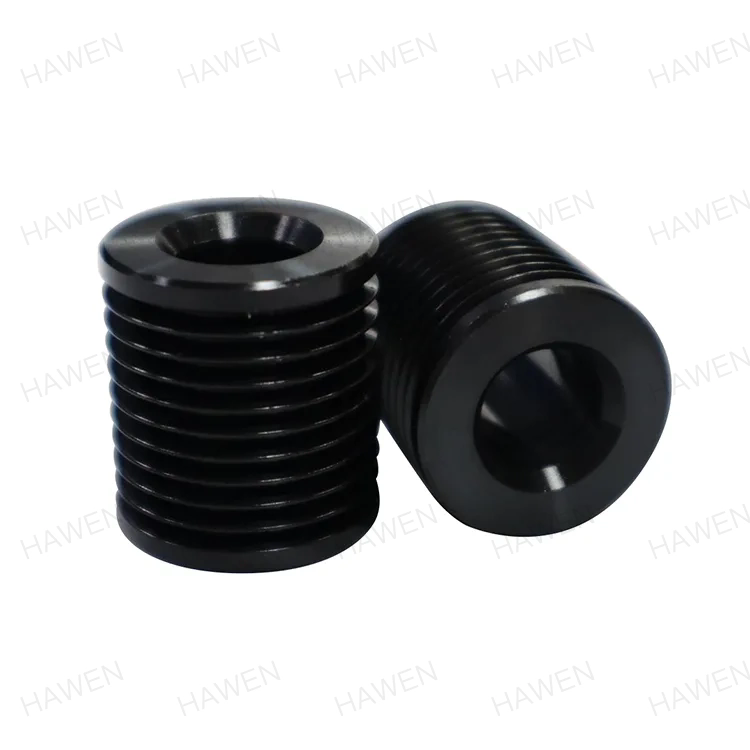
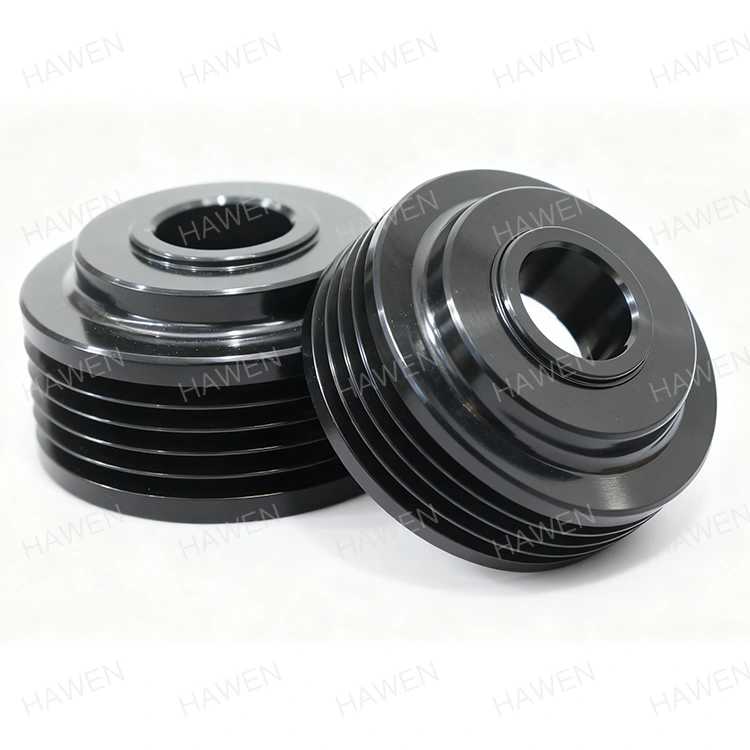
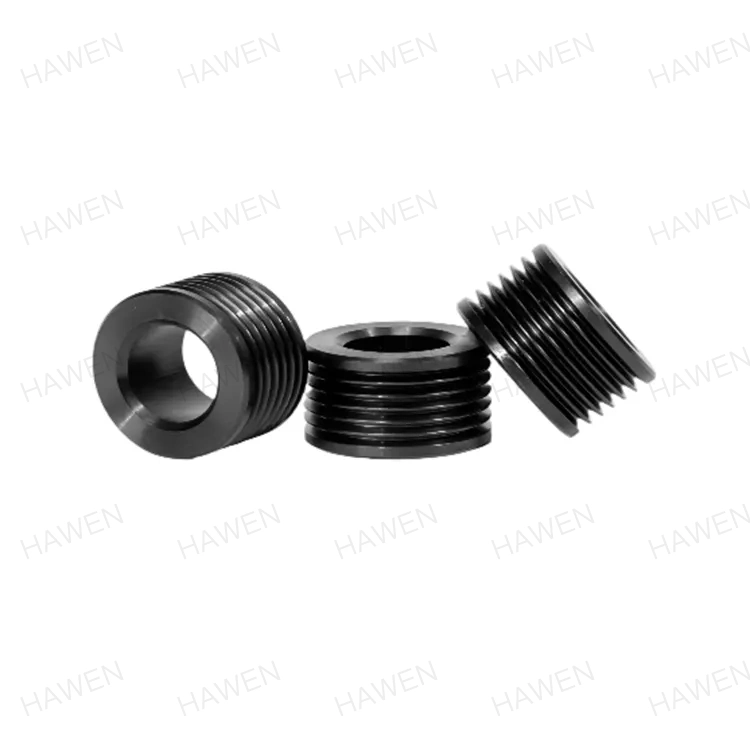
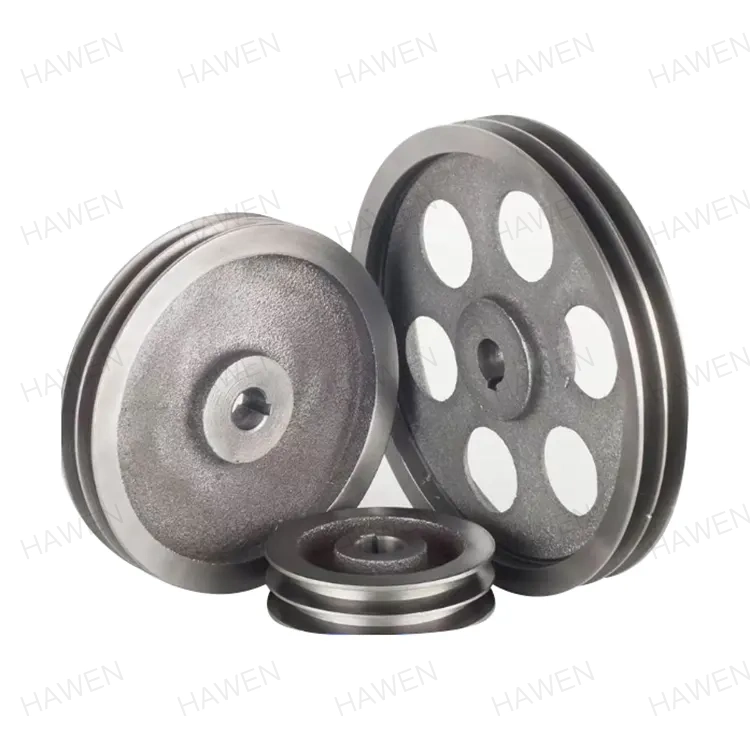
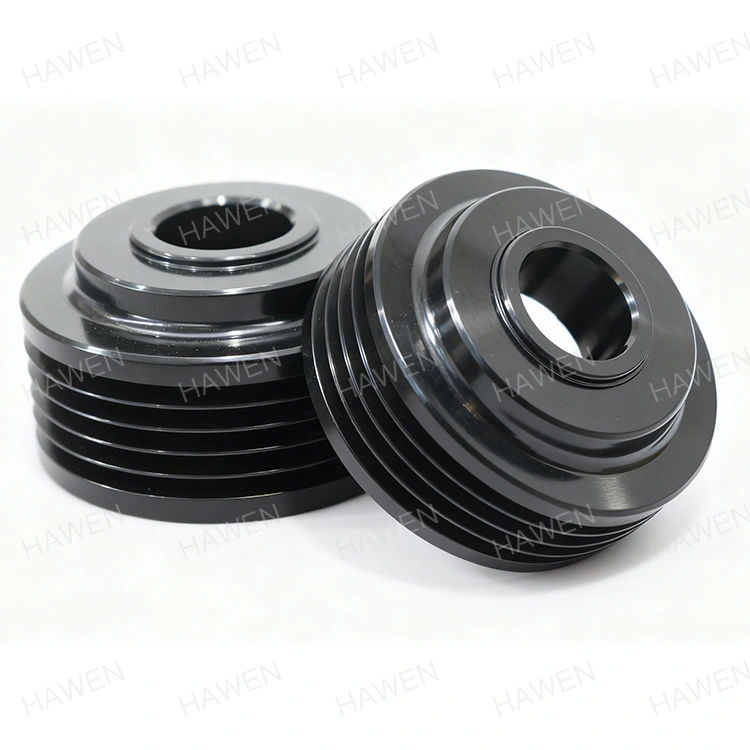
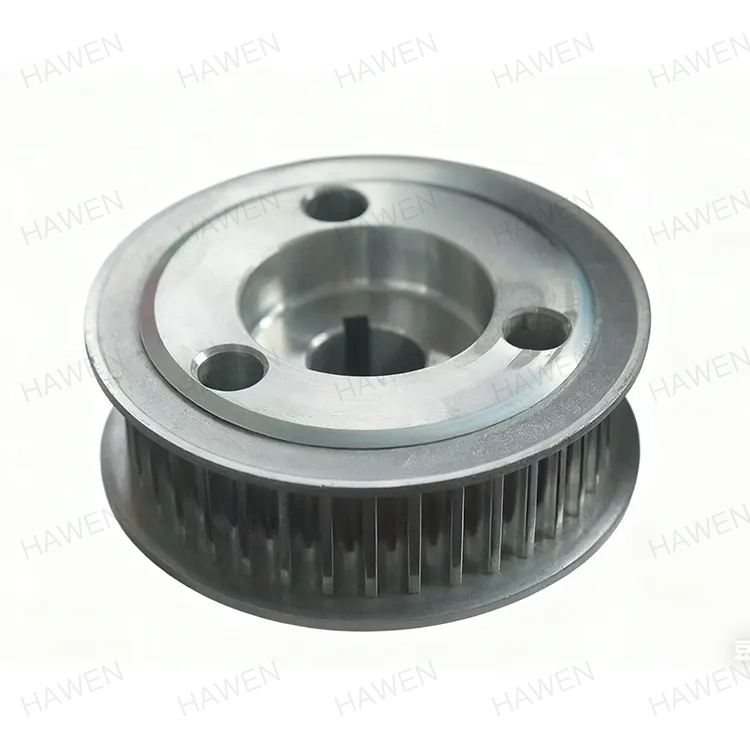
V-belt Pulley


Table of Contents


1. What Is Concentricity and Why Does It Matter in Belt Pulleys?

Concentricity, in the context of Belt Pulleys, is the geometric condition where the center of the Belt Pulley's bore and the center of its outer diameter lie on the same axis. In simpler terms, it means that the Belt Pulley is perfectly round relative to its mounting hole. This seemingly simple requirement has profound implications for the performance of the belt drive system. If the bore and the outer diameter are not concentric, the Belt Pulley will wobble as it rotates. This wobble, measured as radial runout, causes the effective diameter of the Belt Pulley to change continuously as it turns. The belt must constantly stretch and relax to accommodate these changes, generating a host of undesirable effects.

The importance of concentricity can be understood by considering the difference between a perfectly balanced wheel on a car and a wheel that is slightly out of balance. The balanced wheel rolls smoothly, with no vibration. The unbalanced wheel creates a rhythmic shudder that is felt throughout the vehicle. The same principle applies to Belt Pulleys. A highly concentric Belt Pulley rotates smoothly, with the belt running true and consistent. A Belt Pulley with poor concentricity creates a vibration that propagates through the entire system. This vibration is not just a nuisance; it is a source of energy loss, premature wear, and the need for secondary adjustments. The vibration will cause the belt to track differently, the tension to fluctuate, and the mounting bolts to work loose over time, all of which require corrective action.

At Zhejiang Hawen Electromechanical Co., Ltd., we have measured the relationship between concentricity and system performance across hundreds of installations. Our data shows that a Belt Pulley with a concentricity tolerance of +/- 0.05mm (runout) will generate a vibration amplitude that is typically three to four times lower than a Belt Pulley with a tolerance of +/- 0.2mm. This reduction in vibration is directly correlated with a reduction in the frequency and duration of secondary adjustments. The table below illustrates the typical vibration levels associated with different concentricity tolerances.

Concentricity Tolerance (Radial Runout) Typical Vibration Amplitude (mm/s RMS) Expected Secondary Adjustments (per 1000 hours)
+/- 0.05 mm (High Precision) 1.2 - 1.8 1-2
+/- 0.10 mm (Standard Industrial) 3.0 - 4.5 4-6
+/- 0.20 mm (Poor) 6.0 - 8.0 10-15

This data demonstrates a clear correlation: higher concentricity leads to lower vibration, which directly reduces the need for secondary adjustments. The initial cost savings of a lower-precision Belt Pulley are almost always outweighed by the additional maintenance costs incurred over its service life. In the following sections, we will examine the mechanisms by which poor concentricity creates these problems and the manufacturing techniques that ensure high concentricity.


2. How Does Poor Concentricity Cause Secondary Adjustments?

To appreciate why high concentricity minimizes secondary adjustments, it is helpful to understand the cascade of problems caused by a non-concentric Belt Pulley. The first and most immediate effect is radial runout. As the Belt Pulley rotates, the effective radius of the Belt Pulley changes because the center of rotation is not aligned with the center of the Belt Pulley. This means that the belt path is not a perfect circle; it is an ellipse. The belt must stretch to accommodate the longer radius and relax to accommodate the shorter radius as the Belt Pulley turns. This cyclical stretching and relaxing causes the belt to slip, creating a flutter or "chatter" in the belt. This chatter is the source of the vibration that is transmitted to the driven equipment and the mounting structure.

This cyclical stretching also causes the belt to wear unevenly. The portion of the belt that is stretched repeatedly will experience higher friction and heat, leading to premature cracking. The belt may also develop a "glaze" on the surface, reducing its coefficient of friction and causing it to slip. The slipping generates more heat and accelerates the process. Furthermore, the belt's tracking will be affected. A belt naturally tends to track toward the direction of the applied load. If a Belt Pulley is not concentric, the belt will experience varying side loads as it travels around the Belt Pulley. This can cause the belt to wander back and forth across the face of the Belt Pulley, leading to damage to the belt edges and the Belt Pulley flanges.

The inevitable result of these issues is a secondary adjustment. The maintenance technician will need to:

  • Re-tension the belt: The belt will have stretched unevenly and may have become loose. Re-tensioning is a manual process that requires stopping the equipment and using a tension gauge. This is a time-consuming task, especially on large equipment.
  • Re-align the Belt Pulleys: The vibration and belt wander may have caused the Belt Pulleys to shift out of alignment. The technician will need to check and adjust the alignment using a laser alignment tool or a straight edge.
  • Replace the belt: If the belt has been damaged by the uneven wear or tracking, it will need to be replaced. This is a more significant repair, involving additional labor and material costs.
  • Tighten mounting bolts: The vibration often causes the mounting bolts to work loose. The technician will need to tighten them to the correct torque.
  • Inspect the bearings: The vibration from the non-concentric Belt Pulley will also be transmitted to the bearings. Over time, this can cause premature bearing failure, requiring a more extensive repair.

Each of these adjustments takes time. In a busy production facility, the cost of lost production during these adjustments can be substantial. The following table provides an estimate of the typical time and labor required for each secondary adjustment task.

Secondary Adjustment Task Typical Time Required Labor Cost (Est.)
Belt Tension Adjustment 15-30 minutes $25 - $50
Belt Pulley Alignment 30-60 minutes $50 - $100
Belt Replacement 1-2 hours $100 - $200
Mounting Bolt Re-Tightening 15 minutes $20
Bearing Inspection/Replacement 1-2 hours $100 - $200+

These costs multiply over the lifetime of the equipment. A poorly manufactured Belt Pulley can generate a large number of secondary adjustments, each representing a direct cost and an indirect cost in lost production. A high-concentricity Belt Pulley, by contrast, operates with minimal vibration and belt wander, drastically reducing the need for these interventions. At Zhejiang Hawen Electromechanical Co., Ltd., our precision-machined Belt Pulleys are designed to minimize these secondary adjustments, delivering a lower total cost of ownership and higher system reliability.


3. What Manufacturing Processes Ensure High Concentricity?

Achieving high concentricity in a Belt Pulley is not accidental; it is the result of a deliberate and carefully controlled manufacturing process. The process must ensure that the bore and the outside diameter are machined from a single, stable setup, eliminating errors caused by repositioning the workpiece. The journey to high concentricity begins with the raw material, typically a casting or a piece of bar stock, and continues through a series of precision machining operations. The key to concentricity is holding the part in a precise fixture and performing all critical machining operations in a single setup.

The first step is to create a reference surface, typically the bore, which will be the primary datum for all subsequent operations. The bore is machined to a precise size, usually by drilling, reaming, or boring. This bore must be round and straight. The workpiece is then securely mounted on a mandrel or a fixture that fits precisely in the bore. This ensures that the bore is the true center for the rest of the machining operations. The next operation is the machining of the outside diameter. This is typically done using a CNC lathe, which can turn the OD to a precise dimension and with a high degree of roundness. The key to achieving high concentricity is that the bore and the OD are machined in the same setup. This eliminates any error that would be introduced if the part were repositioned.

The final step is the finishing operation, often a fine turning or grinding process. Grinding can achieve an even higher degree of precision than turning, achieving a surface finish of Ra 0.8 µm or better and a concentricity tolerance of +/- 0.02 mm. For applications where the Belt Pulley will be running at high speeds or under heavy loads, grinding is often specified. The table below summarizes the typical concentricity tolerances achieved by different manufacturing processes.

Manufacturing Process Typical Concentricity (Runout) Relative Cost Typical Applications
Turned (Single Setup) +/- 0.10 mm Low General-purpose, low-speed applications
Turned (Multi-Setup) +/- 0.20 mm Low Not recommended for belt drive systems
Turned + Ground +/- 0.02 mm Medium High-speed, precision applications
CNC Machined with Mandrel +/- 0.05 mm Medium-High Standard industrial belt drives
CNC Machined with Mandrel + Grinding +/- 0.02 mm High High-speed, high-precision applications

At Zhejiang Hawen Electromechanical Co., Ltd., we use a combination of CNC turning and, where required, precision grinding to achieve the optimal concentricity for our Belt Pulleys. Our manufacturing process is designed to ensure that every Belt Pulley is produced with a concentricity that meets the specified tolerance. The key to this is the use of precision fixtures and the elimination of manual adjustments during the machining process.


4. What Are the Quantifiable Benefits of High-Concentricity Belt Pulleys?

The benefits of using high-concentricity Belt Pulleys are not just qualitative; they can be measured and quantified. The primary benefits are reduced secondary adjustment time, longer belt and bearing life, and improved overall system efficiency. Each of these benefits translates directly into cost savings and improved productivity. The quantifiable improvements can be demonstrated through a comparison of two identical belt drive systems: one with standard Belt Pulleys and one with high-concentricity Belt Pulleys.

Reduced Secondary Adjustment Time: The most direct benefit is the reduction in the frequency of secondary adjustments. A belt drive system using standard Belt Pulleys may require six or more secondary adjustments per year, each taking an hour or more. A system using high-concentricity Belt Pulleys may only require one or two adjustments per year. The time saved can be substantial, as shown in the table below.

Metric Standard Belt Pulleys High-Concentricity Belt Pulleys Savings
Secondary Adjustments per Year 6-10 1-2 4-9 adjustments
Average Time per Adjustment 45 minutes 20 minutes 25 minutes saved
Total Time per Year 4.5 - 7.5 hours 0.3 - 0.7 hours 4 - 7 hours saved
Annual Labor Cost (at $60/hour) $270 - $450 $20 - $40 $230 - $410 saved

Longer Belt Life: The uneven stress and vibration caused by poor concentricity dramatically reduce belt life. A belt operating on a high-concentricity Belt Pulley can last 2 to 3 times longer than a belt operating on a low-concentricity Belt Pulley. The reduction in belt wear also reduces the frequency of belt changes and the associated downtime.

Longer Bearing Life: The vibration generated by a non-concentric Belt Pulley is transmitted directly to the bearings of the driven equipment and the drive motor. This vibration causes premature bearing wear and failure. High-concentricity Belt Pulleys reduce the vibration transmitted to the bearings, extending their service life. The reduction in bearing failures means less equipment downtime and lower maintenance costs.

Improved System Efficiency: The belt drive system operates more efficiently when the Belt Pulleys are concentric. The belt is not being continuously stretched and relaxed, and the energy lost to friction and vibration is minimized. This can translate into a small but measurable reduction in energy consumption, which, over time, can add up to significant cost savings.

These quantifiable benefits demonstrate that the higher initial cost of a high-quality, high-concentricity Belt Pulley is more than offset by the savings in maintenance and downtime over its service life. At Zhejiang Hawen Electromechanical Co., Ltd., we provide our customers with the data they need to make informed decisions about their Belt Pulley selection, helping them to optimize their total cost of ownership.


5. How to Measure and Verify Concentricity in Production?

Ensuring that Belt Pulleys meet the specified concentricity tolerance requires a robust quality control process. The measurement of concentricity is typically performed using a dial indicator or a coordinate measuring machine (CMM). The test setup is relatively straightforward but requires precision and consistency. The measurement process is as follows:

The Belt Pulley is mounted on a precision mandrel or on the shaft it will be installed on. The mandrel is then placed between centers or in a precision V-block. A dial indicator is mounted on a stand and positioned so that its probe contacts the outside diameter of the Belt Pulley. The Belt Pulley is then rotated slowly, and the dial indicator reading is observed. The total variation in the reading as the Belt Pulley rotates is the total runout. This runout value, which is twice the concentricity error, is used as the acceptance criterion.

The measurement must be taken at several points along the face of the Belt Pulley to ensure consistency. The table below provides the acceptance criteria for different Belt Pulley grades used in our factory.

Belt Pulley Grade Acceptable Runout Equivalent Concentricity Error
Industrial Grade (Standard) ≤ 0.20 mm +/- 0.10 mm
Precision Grade ≤ 0.10 mm +/- 0.05 mm
High-Precision Grade (Ground) ≤ 0.05 mm +/- 0.025 mm

At Zhejiang Hawen Electromechanical Co., Ltd., we use a combination of in-process gauging and final inspection to ensure that every Belt Pulley meets the specified concentricity requirements. Our quality control system is certified to ISO 9001:2015, and we maintain detailed records of all inspections. This ensures that our customers receive Belt Pulleys that meet their performance expectations and reduce the need for secondary adjustments.


6. Frequently Asked Questions (FAQ)

Question 1: What is the difference between concentricity and runout in belt pulleys?

Answer: Concentricity and runout are related but distinct concepts. Concentricity is the geometric condition where two or more features share a common axis. Runout, on the other hand, is the total variation in the position of a feature as the part is rotated around a fixed axis. For a Belt Pulley, concentricity is the error between the center of the bore and the center of the outside diameter. Runout is the total wobble measured at the outside diameter as the Belt Pulley is rotated. Runout is typically twice the concentricity error. A Belt Pulley with a runout of 0.1 mm has a concentricity error of +/- 0.05 mm.

Question 2: How does poor concentricity affect belt life?

Answer: Poor concentricity causes the belt to stretch and relax cyclically as the Belt Pulley rotates. This leads to uneven belt wear, which manifests as cracking and glazing on the belt surface. The belt also experiences higher friction and heat, further accelerating wear. Studies have shown that a belt running on a Belt Pulley with 0.2 mm runout can have a service life that is 40-60% shorter than a belt running on a Belt Pulley with 0.05 mm runout.

Question 3: Can I compensate for poor pulley concentricity by adjusting belt tension?

Answer: No, adjusting belt tension cannot compensate for poor concentricity. Tension is a static adjustment that sets the average load on the belt. Concentricity error creates a dynamic load variation that is not affected by the static tension. While a higher tension might reduce some belt flutter, it will also increase the load on the bearings and may cause premature belt failure. The only effective solution is to use a Belt Pulley with the correct concentricity.

Question 4: What is the typical cost difference between a standard and a high-precision belt pulley?

Answer: The cost difference depends on the size, material, and manufacturing volume. Typically, a high-precision Belt Pulley (with runout of +/- 0.05 mm or better) costs between 30-50% more than a standard Belt Pulley (+/- 0.10 mm). However, the increased initial cost is often offset by the reduced maintenance costs and longer belt life. The total cost of ownership over a 5-year period is often lower for the high-precision Belt Pulley.

Question 5: How can I verify the concentricity of a belt pulley I have already purchased?

Answer: You can verify the concentricity using a dial indicator as described in this article. Mount the Belt Pulley on a precision mandrel and place it between centers. Set up the dial indicator to touch the outside diameter of the Belt Pulley. Rotate the Belt Pulley and observe the total reading variation. This is the total runout. If the total runout exceeds the expected tolerance for the application, the Belt Pulley should be replaced. Many manufacturers, including Zhejiang Hawen Electromechanical Co., Ltd., provide a certificate of conformance with each order, which includes the measured runout values.


7. Conclusion

The relationship between Belt Pulley concentricity and secondary adjustment time is direct and significant. A non-concentric Belt Pulley creates radial runout, which translates into vibration, belt wander, and uneven belt wear. These issues inevitably lead to a cycle of secondary adjustments: re-tensioning, re-alignment, belt replacement, and bearing maintenance. These adjustments are not just a nuisance; they represent a significant cost in terms of labor, downtime, and component replacement.

High-concentricity Belt Pulleys address the root cause of these issues. By ensuring that the bore and the outside diameter are perfectly aligned, they eliminate the sources of vibration and belt wander. The result is a belt drive system that runs smoothly from the start, requires minimal maintenance, and delivers a longer service life. At Zhejiang Hawen Electromechanical Co., Ltd., we are committed to manufacturing Belt Pulleys that meet the highest standards of concentricity. Our precision machining processes, rigorous quality control, and adherence to international standards ensure that our customers receive Belt Pulleys that minimize secondary adjustments and maximize system reliability.

Contact Zhejiang Hawen Electromechanical Co., Ltd. today to learn how our high-concentricity Belt Pulleys can improve your operations and reduce maintenance costs.

Related News
Leave me a message
X
We use cookies to offer you a better browsing experience, analyze site traffic and personalize content. By using this site, you agree to our use of cookies.Privacy Policy