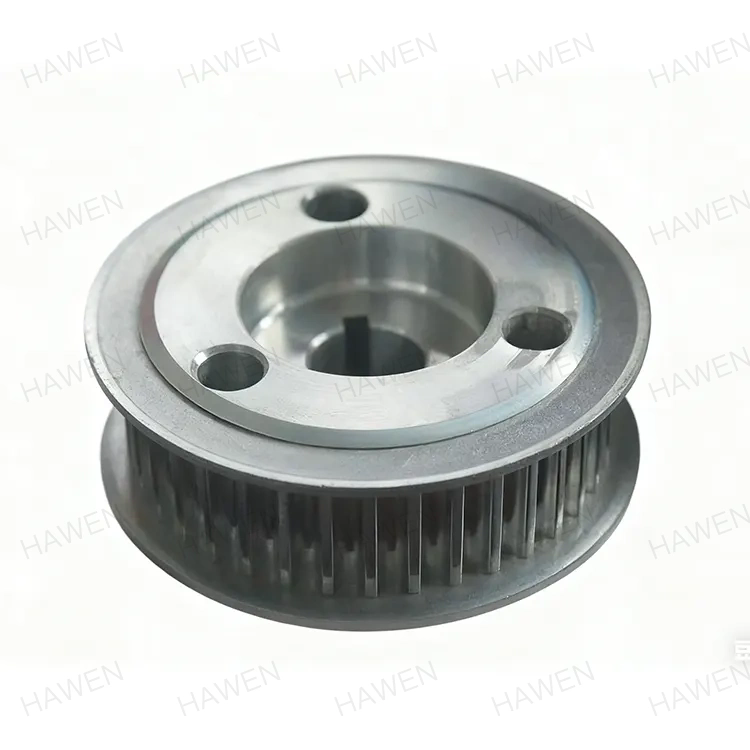
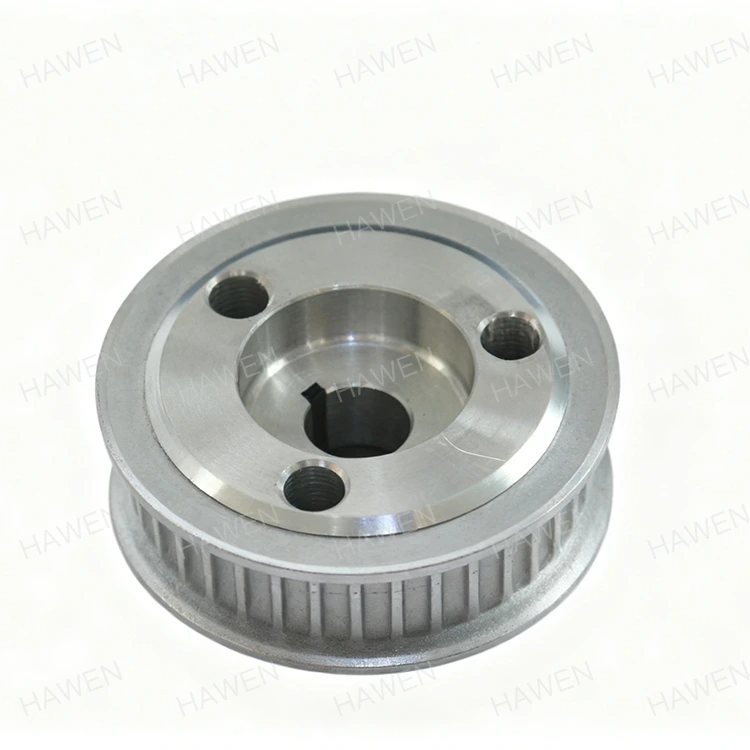
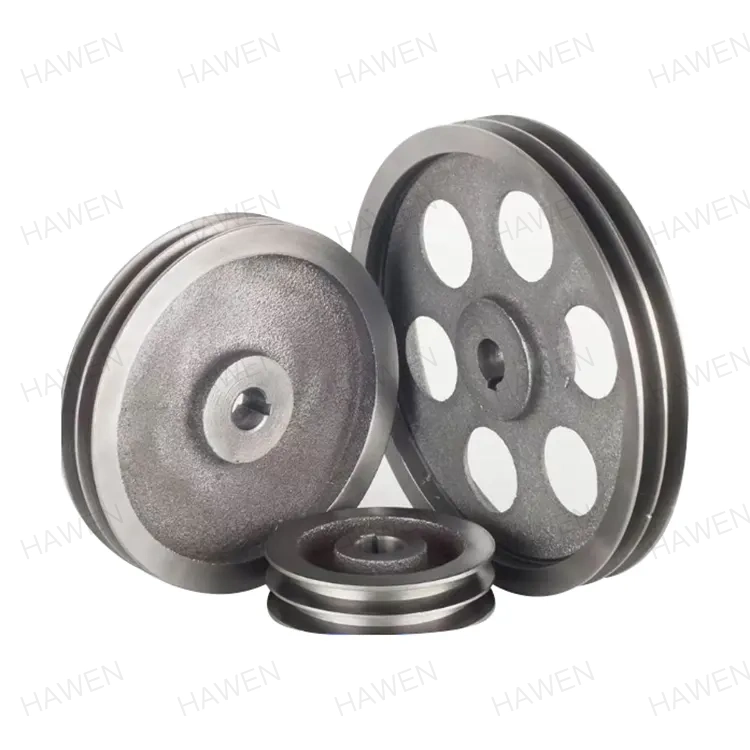
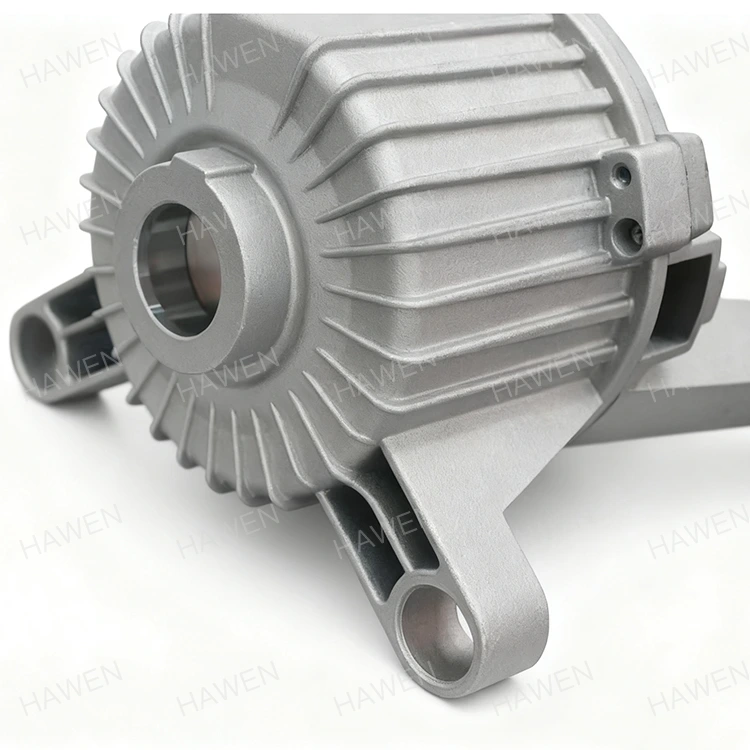
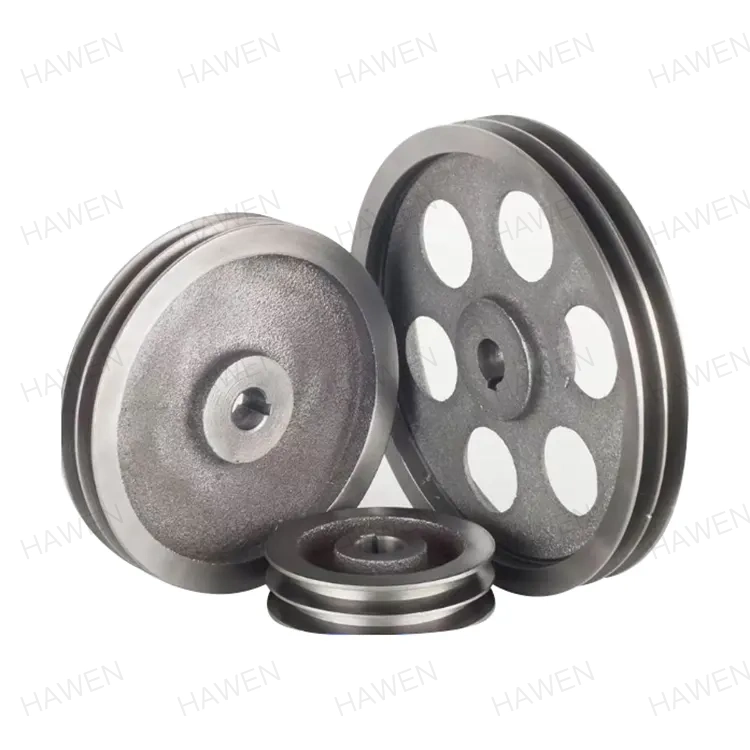
At a busy distribution center in the industrial belt of Zhejiang Province, a conveyor line had been running for three years without major issues. Then the problems started. The belt began to drift, packages tumbled off the sides, and the motor amperage spiked unpredictably. The maintenance team replaced the belt, re-tensioned the take-up, and even swapped out the gearbox. Nothing worked. The root cause, discovered only after a thorough vibration analysis, was the drive pulley. Its lagging had worn unevenly, creating a condition known as "differential slip" that caused the belt to track erratically under load. The conveyor system, seemingly robust, had been compromised by the one component everyone had overlooked: the Belt Pulleys.
This scenario illustrates a fundamental truth in material handling: Belt Pulleys are not passive components. They are the mechanical interface between the drive system and the belt, and they simultaneously perform four critical functions. They transmit torque from the motor to the belt. They maintain belt tension through the take-up system. They correct belt tracking through the crown profile. And they absorb the impact and wear of the material being conveyed. When any one of these functions is compromised, the entire conveyor system suffers. This article will examine each of these functions in technical detail, explaining why Belt Pulleys are essential for reliable, efficient, and safe material handling operations.
To understand why Belt Pulleys are essential, we must first trace the path of power through a conveyor system. The chain begins at the electric motor, which converts electrical energy into rotational mechanical energy. The motor shaft is connected to a gearbox, which reduces the speed and multiplies the torque. The gearbox output shaft is coupled to the drive pulley shaft. The drive pulley, wrapped with the conveyor belt, transmits the torque to the belt through friction. The belt, in turn, moves the material. Every link in this chain is critical, but the drive pulley is unique because it is the point where torque is transferred from a rigid steel shaft to a flexible rubber belt. This transition is the most challenging part of the entire system.
The Belt Pulleys are the first components to fail because they are subjected to the most complex combination of loads. The drive pulley experiences torsional load from the gearbox, radial load from the belt tension, and bending load from the shaft deflection. It also experiences the cyclic loading of the belt as each splice passes over the pulley. Over time, these loads cause fatigue in the shaft, wear in the keyway, and degradation of the lagging. The tail pulley, while not transmitting drive torque, experiences the same bending and fatigue loads, plus the additional stress of material build-up if the belt is not cleaned properly. The snub pulley, if present, experiences high radial loads from the increased wrap angle.
The failure of a Belt Pulley is rarely sudden. It is a progressive process that begins with subtle symptoms and culminates in catastrophic failure if not addressed. The most common failure modes are:
At Zhejiang Hawen Electromechanical Co., Ltd., we have analyzed hundreds of pulley failures from conveyor systems across China. Our data shows that more than 60% of pulley failures are related to lagging wear or inadequate lagging selection. This is why we place such emphasis on helping our customers select the right lagging for their application and on providing maintenance guidelines that prevent premature wear.
The crown of a Belt Pulley is the slight convex curvature of the pulley face, measured as the difference in radius between the center and the edges. It is typically expressed as a percentage of the face width. For example, a 1000mm wide pulley with a 0.5% crown has a center radius that is 5mm larger than the edge radius. At first glance, this curvature seems counterintuitive. Wouldn't a flat pulley be simpler to manufacture and more efficient? The answer is no, and the reason lies in the mechanics of belt tracking. The crown is not a manufacturing convenience; it is a functional necessity that keeps the belt centered on the pulley.
To understand why the crown works, consider the forces acting on the belt as it runs over the pulley. The belt is under tension, and it naturally seeks the path of least resistance. If the belt starts to drift to one side, the tension on that side increases because the belt is being stretched over the larger radius of the crown. This increased tension creates a restoring force that pushes the belt back toward the center. The crown, therefore, provides a self-centering mechanism that operates continuously and passively. Without a crown, or with an insufficient crown, the belt will drift to one side and rub against the structure. This causes edge damage, belt misalignment, and eventually belt failure.
The amount of crown required depends on the type of belt and the application. The table below provides our recommended crown values based on years of field experience and testing at our factory:
| Belt Type | Recommended Crown (% of face width) | Typical Pulley Diameter (mm) | Notes |
| Fabric Belt (Light Duty) | 0.3 - 0.5% | 100 - 300 | Lower crown for thinner belts |
| Fabric Belt (Heavy Duty) | 0.5 - 0.8% | 300 - 600 | Higher crown for thicker belts |
| Steel Cord Belt | 0.2 - 0.3% | 600 - 1200 | Lower crown to avoid over-stressing cords |
| PVC/PU Belt | 0.5 - 1.0% | 50 - 200 | Higher crown for smooth, flexible belts |
The crown must be machined to a high degree of accuracy to ensure proper belt tracking. At our factory, we use CNC lathes to turn the crown to a tolerance of +/- 0.05 mm. We also verify the crown profile after machining using a profilometer. This level of precision ensures that every Belt Pulley we produce provides reliable, consistent belt tracking, regardless of the operating conditions. The crown is not optional; it is the foundation of belt tracking.
The lagging is the material applied to the surface of the drive pulley to increase friction and protect the pulley shell from wear. It is the most important factor in determining the torque transmission capability of the conveyor. The friction between the belt and the lagging, combined with the wrap angle, determines the maximum torque that can be transmitted before the belt slips. If the lagging is worn or the wrong material is selected, the belt will slip, causing loss of production, belt damage, and potentially a fire hazard. Selecting the right lagging is therefore a critical engineering decision that should be based on a careful analysis of the application.
There are three main types of lagging used in conveyor pulleys: rubber, ceramic, and polyurethane. Rubber lagging is the most common and is available in different patterns, such as smooth, diamond groove, and herringbone. The pattern affects the friction coefficient and the ability of the lagging to shed water and debris. Ceramic lagging consists of ceramic tiles embedded in a rubber matrix. The ceramic tiles provide a very high friction coefficient and excellent wear resistance, making them ideal for high-torque applications and abrasive materials. Polyurethane lagging is used in food processing and other clean environments where rubber is not acceptable. The table below compares the key characteristics of these lagging materials.
| Lagging Material | Friction Coefficient (μ) | Wear Resistance | Typical Applications |
| Smooth Rubber | 0.25 - 0.35 | Good | General purpose, dry conditions |
| Diamond Groove Rubber | 0.35 - 0.45 | Good | Wet or oily conditions, medium torque |
| Ceramic Tile | 0.45 - 0.55 | Excellent | High torque, abrasive materials, wet conditions |
| Polyurethane | 0.30 - 0.40 | Very Good | Food processing, clean environments |
The selection of the lagging material is not just about the friction coefficient. It also involves considerations of the environment, the material being conveyed, and the maintenance practices. In a food processing plant, for example, the lagging must be able to withstand washdown with caustic cleaning agents. In a mining application, the lagging must be able to resist the abrasive action of ore and rock. Our engineering team at Hawen works closely with customers to select the optimal lagging for each application. We also offer lagging replacement services and can advise on the best maintenance schedule to maximize lagging life.
A Belt Pulley may look like a simple cylinder, but its internal stress distribution is complex. When the pulley is under load, the shaft bends, the shell deforms, and the weld seams experience high stress concentrations. If the design is not optimized, these stresses can lead to fatigue cracks and premature failure. To ensure that our Belt Pulleys are designed for maximum reliability, we use Finite Element Analysis (FEA) to simulate the stresses under real-world loading conditions. FEA allows us to see the hidden stresses that are not visible to the naked eye and to optimize the design before the first pulley is manufactured.
The FEA model of a Belt Pulley includes the shaft, the hub, the end discs, and the shell. The loads applied to the model include the belt tension, the torque from the gearbox, and the weight of the pulley itself. The model also accounts for the contact pressure between the belt and the lagging. The results of the analysis reveal the areas of high stress, which are typically found at the following locations:
Based on the FEA results, we optimize the design of our Belt Pulleys to reduce stress concentrations and improve fatigue life. For example, we may increase the fillet radius at the shaft shoulder, increase the weld size, or use a higher-strength material for the shaft. We also validate the FEA results with physical testing. Our factory has a test rig that can apply static and dynamic loads to a pulley while measuring strain and vibration. This combination of simulation and testing ensures that our Belt Pulleys are designed to withstand the most demanding applications.
Even the most well-designed Belt Pulleys will eventually wear out. The key to maximizing their service life and preventing unexpected failures is a structured maintenance program. A maintenance program for conveyor pulleys should include daily, weekly, monthly, and annual tasks. Each task should be specific and measurable, and the results should be recorded to track the condition of the pulley over time. The following sections outline the key maintenance tasks for Belt Pulleys in conveyor systems.
Daily Checks: The operator should perform a visual inspection of the conveyor at the start of each shift. Look for signs of belt misalignment, such as the belt rubbing against the structure or the material spilling off the sides. Listen for unusual noises, such as squealing or grinding, which could indicate a bearing problem. Check for any signs of lagging wear or damage.
Weekly Checks: The maintenance technician should check the belt tension and adjust it if necessary. Check the condition of the lagging and look for any embedded material that could damage the belt. Check the pulley for any signs of movement or looseness. Lubricate the bearings if required.
Monthly Checks: The technician should measure the wear on the lagging using a depth gauge. If the lagging has worn beyond the recommended limit, it should be replaced. Check the alignment of the pulleys using a laser alignment tool. Check the condition of the shaft and the keyway for any signs of wear or cracking.
Annual Checks: The annual maintenance should include a thorough inspection of the entire conveyor system. The pulleys should be removed and inspected for cracks, corrosion, and wear. The bearings should be replaced if they show any signs of wear. The shaft should be inspected for fatigue cracks using non-destructive testing methods such as magnetic particle inspection or ultrasonic testing. The following table provides a summary of the maintenance tasks and their recommended frequency.
| Task | Frequency | What to Check | Action if Abnormal |
| Visual Inspection | Daily | Belt misalignment, unusual noise, lagging damage | Investigate and correct |
| Belt Tension Check | Weekly | Tension gauge reading | Adjust take-up |
| Lagging Wear Measurement | Monthly | Lagging thickness, wear pattern | Replace lagging if worn beyond limit |
| Pulley Alignment | Monthly | Laser alignment readings | Re-align pulleys |
| Shaft Inspection | Annually | Cracks, keyway wear, corrosion | Replace shaft if defective |
| Bearing Replacement | Annually | Noise, vibration, temperature | Replace bearings |
At Hawen, we provide our customers with a comprehensive maintenance manual for our Belt Pulleys, including recommended schedules and inspection criteria. We also offer maintenance training and on-site support to help our customers maximize the life of their conveyor systems.
Question 1: How often should the lagging on a drive pulley be replaced?
Answer: The lagging on a drive pulley should be replaced when it has worn to the point where the friction coefficient is insufficient to transmit the required torque without slipping. Typically, this occurs when the lagging has worn by 50% of its original thickness, or when the wear pattern is uneven. In a typical industrial application, lagging may last 2-5 years, depending on the operating conditions. Regular inspection is essential to determine the optimal replacement interval. Our factory can provide specific recommendations based on your application.
Question 2: How can I tell if belt misalignment is caused by a pulley problem or a tension problem?
Answer: Belt misalignment can be caused by either a pulley problem or a tension problem. If the belt is misaligned at all points along the conveyor, the issue is likely a tension problem. If the belt is misaligned only at the drive pulley, the issue is likely a pulley problem, such as a worn crown or lagging. To diagnose the problem, first check the belt tension and adjust it if necessary. If the misalignment persists, inspect the pulleys for a worn crown, damaged lagging, or a misaligned shaft. A laser alignment tool can help determine if the pulleys are properly aligned.
Question 3: What is the difference between ceramic lagging and rubber lagging, and when should each be used?
Answer: Ceramic lagging has a higher friction coefficient and better wear resistance than rubber lagging, making it ideal for high-torque applications, abrasive materials, and wet conditions. Rubber lagging is suitable for general-purpose applications, dry conditions, and lower torque requirements. The selection depends on the specific application. For example, a coal mine conveyor handling wet, abrasive coal would benefit from ceramic lagging, while a package handling conveyor would be fine with rubber lagging.
Question 4: What causes a pulley shaft to fail, and how can it be prevented?
Answer: The most common cause of pulley shaft failure is fatigue cracking, which occurs when the shaft is subjected to cyclic bending stresses. The cracks typically start at stress concentrators, such as the keyway or a change in diameter. To prevent shaft failure, the shaft should be designed with an adequate safety factor, stress concentrators should be minimized, and the shaft should be inspected regularly for cracks. Non-destructive testing, such as magnetic particle inspection, can detect cracks before they become critical.
Question 5: How do I know if my conveyor pulleys are due for replacement?
Answer: The conveyor pulleys should be replaced when they show signs of significant wear or damage, such as cracked shells, worn or damaged lagging, a worn keyway, or a bent shaft. If the pulley has been in service for more than 10 years, a thorough inspection is recommended. If the inspection reveals any of these conditions, the pulley should be replaced. Our factory can provide a replacement pulley that meets the original specifications or an upgraded design for improved performance.
Belt Pulleys are the unsung heroes of conveyor systems. They are not just cylinders that rotate; they are precision-engineered components that transmit torque, maintain tension, correct tracking, and absorb the stresses of material handling. Their proper design, selection, and maintenance are critical to the reliability, efficiency, and safety of any conveyor system. From the crown profile that keeps the belt centered to the lagging that provides the grip, every feature of a Belt Pulley serves a specific purpose. At Zhejiang Hawen Electromechanical Co., Ltd., we have dedicated our engineering expertise to designing and manufacturing Belt Pulleys that meet the most demanding requirements. Our factory uses advanced FEA modeling, precision machining, and rigorous testing to ensure that every pulley we produce delivers reliable performance in the field.
Whether you are designing a new conveyor system or maintaining an existing one, the choice of Belt Pulleys is a decision that should not be taken lightly. We invite you to contact our technical team to discuss your specific application requirements. We can help you select the right pulley design, lagging material, and maintenance schedule to maximize your conveyor's uptime and productivity. Our commitment to quality and customer support has made us a trusted partner for material handling operations across China and beyond.
Contact Zhejiang Hawen Electromechanical Co., Ltd. today to discuss your conveyor pulley requirements and discover how our Belt Pulleys can improve your material handling operations.
-
Address:No.809 Jinniu Street, Bihu Town, Liandu District, Lishui City, Zhejiang Province China
Copyright © 2026 Zhejiang Hawen Electromechanical Co., Ltd. All Rights Reserved. Links| Sitemap| RSS| XML| Privacy Policy