News

Which material is best for Belt Pulleys in high-vibration environments?

2026-10-27 0 Leave me a message

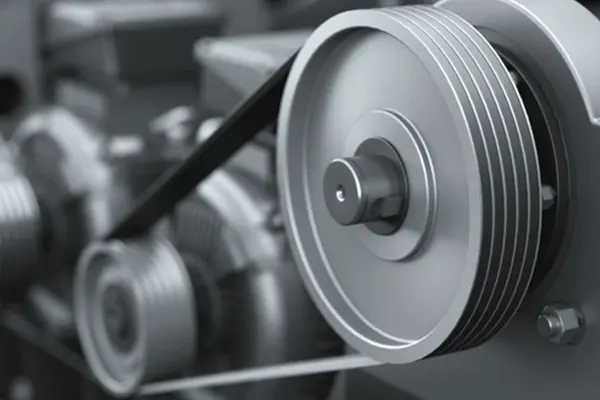
In a high-vibration environment, a Belt Pulley is not a passive component. It is a vibrating mass that can amplify the very forces it is supposed to transmit. A pulley made from the wrong material will transfer vibration directly to the bearing, the shaft, and the driven equipment, accelerating fatigue and shortening the life of the entire drive system. The vibration may come from the prime mover, from the driven machine, or from the belt itself. Whatever the source, the pulley material determines how the vibration is handled. Some materials absorb vibration and dissipate it as heat. Others transmit it with almost no loss. Choosing the right material for Belt Pulleys in a high-vibration environment is therefore a critical procurement decision, not a secondary detail.


This guide is written for buyers who need to specify Belt Pulleys for high-vibration applications. We will compare the most common pulley materials—cast iron, ductile iron, carbon steel, and aluminum—across vibration damping, fatigue strength, machinability, and cost. We will explain how material properties affect the pulley's ability to resist vibration-induced failure, and we will provide a selection framework based on the specific vibration conditions. We will also provide detailed product parameters from our factory at Zhejiang Hawen Electromechanical Co., Ltd. Whether you are sourcing pulleys for a crusher, a vibrating screen, a fan, or a pump, this guide will help you select the material that delivers the best balance of damping, durability, and value.

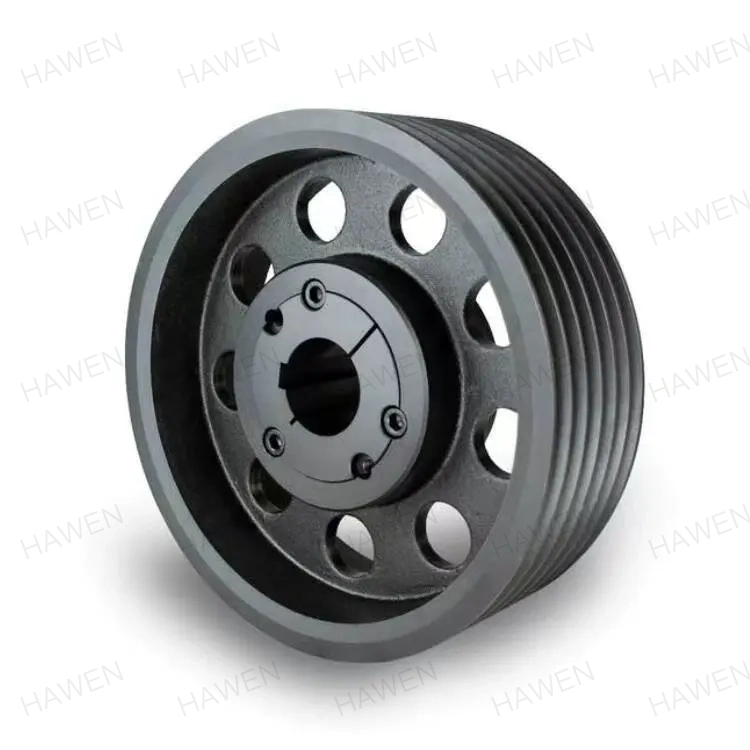
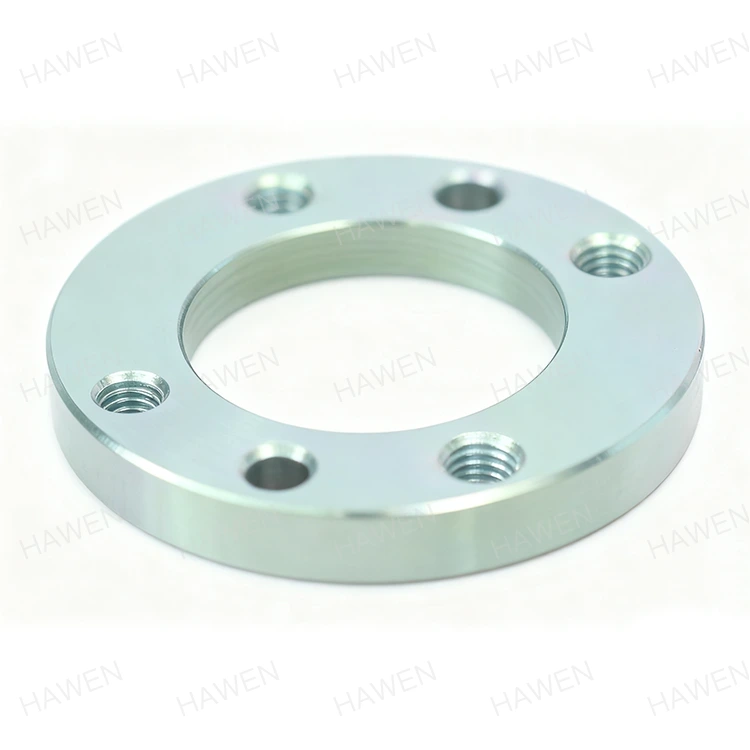
Flanged Pulley


Table of Contents


1. Why Does Material Choice Matter for Belt Pulleys in High Vibration?

Vibration is a form of mechanical energy. When a Belt Pulley vibrates, that energy must go somewhere. It can be transmitted to the shaft and bearings, where it causes fatigue and wear. It can be reflected back into the belt, where it causes tension fluctuations and tracking problems. Or it can be absorbed by the pulley material and dissipated as internal friction. The material determines which of these paths dominates. A material with high internal damping absorbs a significant portion of the vibration energy and converts it into heat. A material with low damping transmits most of the energy to the connected components. The table below compares the damping characteristics of common pulley materials.

Material Relative Damping Capacity Vibration Transmission Typical Application
Gray Cast Iron High Low High-vibration machinery, crushers
Ductile Iron Moderate to High Moderate Heavy-duty drives, vibrating screens
Carbon Steel Low High General industrial drives
Aluminum Very Low Very High High-speed, low-vibration applications

At Zhejiang Hawen Electromechanical Co., Ltd., our factory manufactures Belt Pulleys in a range of materials, including gray cast iron, ductile iron, and carbon steel. We understand that the material choice is determined by the vibration environment, and we work with our customers to select the material that provides the best damping and durability for their specific application.


2. How Does Cast Iron Perform as a Vibration-Damping Pulley Material?

Gray cast iron is the most effective common material for damping vibration in Belt Pulleys. Its graphite flakes, which are distributed throughout the iron matrix, act as microscopic energy absorbers. When the pulley vibrates, the graphite flakes slide against the iron matrix, creating internal friction that dissipates the vibration energy as heat. This is why gray cast iron is the traditional choice for pulleys in high-vibration applications such as crushers, vibrating screens, and heavy-duty fans. The table below summarizes the properties of gray cast iron for pulley applications.

Property Gray Cast Iron Implication for High Vibration
Damping Capacity High Absorbs vibration, reduces transmission
Tensile Strength Moderate (150-300 MPa) Adequate for most pulley applications
Compressive Strength High Resists crushing loads
Machinability Excellent Allows precise groove and bore machining
Cost Low to Moderate Economical for large pulleys
Brittleness High Not suitable for shock-loaded applications

At our factory, we manufacture gray cast iron Belt Pulleys for high-vibration applications. We control the graphite flake size and distribution through the casting process to ensure consistent damping performance. We also machine the pulley grooves to precise tolerances to ensure proper belt tracking. Our gray cast iron pulleys are suitable for applications where vibration damping is the primary requirement and the shock loads are moderate.


3. When Does Ductile Iron Offer a Better Balance of Damping and Strength?

Ductile iron, also known as nodular iron, offers a better balance of damping and strength than gray cast iron. The graphite in ductile iron is in the form of nodules rather than flakes, which gives the material higher tensile strength and greater ductility. The damping capacity is lower than that of gray cast iron but still significantly better than steel or aluminum. This combination makes ductile iron the preferred material for Belt Pulleys in applications where high vibration is combined with high loads or shock loads. Examples include vibrating screens, heavy-duty conveyors, and crushers that experience both continuous vibration and periodic impact. The table below compares ductile iron with gray cast iron.

Property Gray Cast Iron Ductile Iron
Damping Capacity High Moderate to High
Tensile Strength 150-300 MPa 400-800 MPa
Ductility Low Moderate to High
Shock Resistance Poor Good
Cost Low Moderate

At Hawen, our factory manufactures ductile iron Belt Pulleys for applications that require both vibration damping and high strength. We use a controlled casting process to ensure that the graphite nodules are uniformly distributed and that the material meets the required mechanical properties. Our ductile iron pulleys are suitable for the most demanding high-vibration applications.


4. What Are the Trade-Offs of Steel and Aluminum Pulleys?

Steel and aluminum pulleys are used in applications where strength, weight, or cost are more important than vibration damping. Carbon steel pulleys have high tensile strength and good fatigue resistance, but their damping capacity is low. They transmit vibration efficiently to the shaft and bearings, which can accelerate wear in high-vibration environments. Aluminum pulleys are lightweight and corrosion-resistant, but their damping capacity is very low and their strength is lower than steel. They are used in high-speed, low-vibration applications where weight reduction is critical, such as in some automotive and aerospace drives. The table below summarizes the trade-offs of steel and aluminum pulleys.

Property Carbon Steel Aluminum
Damping Capacity Low Very Low
Tensile Strength High (400-700 MPa) Moderate (200-300 MPa)
Weight Heavy Light
Corrosion Resistance Poor (requires coating) Good
Cost Moderate Moderate to High
Best Suited For High-load, low-vibration High-speed, low-vibration

At our factory, we manufacture steel and aluminum Belt Pulleys for applications where their specific properties are required. We understand that these materials are not the best choice for high-vibration environments, and we advise our customers accordingly. Our goal is to help our customers select the material that provides the best balance of performance and cost for their specific application.


5. How Do You Match the Pulley Material to the Vibration Source?

Matching the pulley material to the vibration source requires an understanding of the vibration frequency, amplitude, and direction. High-frequency, low-amplitude vibration is best absorbed by a material with high damping capacity, such as gray cast iron. Low-frequency, high-amplitude vibration, especially if it is accompanied by shock loads, requires a material with both damping and strength, such as ductile iron. If the vibration is primarily transmitted from the driven machine rather than generated at the pulley, a steel pulley may be adequate, provided that the rest of the system is designed to isolate the vibration. The table below provides a selection framework based on vibration characteristics.

Vibration Characteristic Recommended Material Reason
High frequency, low amplitude Gray Cast Iron High damping capacity
Low frequency, high amplitude Ductile Iron Damping plus strength
Shock loads with vibration Ductile Iron Shock resistance plus damping
Low vibration, high load Carbon Steel High strength, adequate for low vibration
High speed, low vibration Aluminum Light weight, adequate for low vibration

At Zhejiang Hawen Electromechanical Co., Ltd., our engineering team can help you analyze the vibration characteristics of your application and recommend the appropriate pulley material. We can also provide vibration testing and simulation services to verify the performance of the selected material. Our goal is to ensure that the Belt Pulleys we supply deliver reliable performance in the most demanding vibration environments.


6. How Do You Evaluate a Belt Pulley Supplier for High-Vibration Service?

Evaluating a supplier of Belt Pulleys for high-vibration service requires a focus on material quality, casting control, machining precision, and testing capability. The supplier must use high-quality materials with consistent damping properties. They must control the casting process to ensure that the graphite structure is uniform and that the material meets the required mechanical properties. They must machine the pulley grooves to precise tolerances to ensure proper belt tracking. And they must test the pulleys for balance and vibration performance. The table below summarizes the evaluation criteria.

Evaluation Criterion What to Look For Why It Matters
Material Quality Certified castings, consistent graphite structure Ensures damping performance
Casting Control In-house casting or qualified foundry partner Ensures material properties
Machining Precision CNC machining, groove tolerance control Ensures belt tracking and balance
Balance Testing Dynamic balancing at operating speed Prevents vibration from imbalance
Vibration Testing Modal analysis or vibration measurement Verifies damping performance

At our factory, we have been producing Belt Pulleys for high-vibration applications for over a decade. We use certified castings from qualified foundries, and we machine the pulley grooves to precise tolerances. We perform dynamic balancing on every pulley and vibration testing on representative samples. We invite you to evaluate us against these criteria and to consider us as your partner for Belt Pulleys in high-vibration environments.


7. What Are the Key Product Parameters from Our Factory?

The following table provides the key product parameters for our Belt Pulleys. These pulleys are available in gray cast iron, ductile iron, and carbon steel to suit different vibration environments. Our factory can also produce custom pulleys to meet specific requirements.

Parameter Specification Range Notes
Material Gray Cast Iron, Ductile Iron, Carbon Steel Selected for vibration environment
Diameter Range 50 - 1,500 mm Custom sizes available
Groove Profile V-belt, Flat, Timing, Multi-rib Selected for belt type
Number of Grooves 1 - 12 Custom configurations available
Balance Grade G6.3 or better Dynamic balancing at operating speed
Surface Finish Machined, painted, coated Selected for environment
Bore Type Straight, Taper lock, Keyed Selected for shaft connection
MOQ 10 pieces Negotiable for large orders
Lead Time 2 - 4 weeks Depends on quantity and customization

At our factory, we manufacture our Belt Pulleys to meet these specifications and more. We can customize the material, diameter, groove profile, and bore type to suit your specific requirements. Our quality control system includes inspection of raw materials, in-process inspection, and final inspection before shipment. Our goal is to provide our customers with high-quality Belt Pulleys that deliver reliable performance in high-vibration environments.


8. Frequently Asked Questions (FAQ)

Question 1: What is the best material for belt pulleys in high-vibration environments?

Answer: Gray cast iron is the best material for high-vibration environments where the primary requirement is vibration damping. Its graphite flakes absorb vibration energy and dissipate it as heat. For applications that combine high vibration with high loads or shock loads, ductile iron is the better choice because it offers a balance of damping and strength. At Zhejiang Hawen Electromechanical Co., Ltd., we manufacture both gray cast iron and ductile iron pulleys for high-vibration service.

Question 2: Can steel pulleys be used in high-vibration environments?

Answer: Steel pulleys have low damping capacity and tend to transmit vibration to the shaft and bearings rather than absorbing it. They are not the best choice for high-vibration environments unless the vibration is isolated by other means, such as flexible couplings or vibration-damping mounts. For high-vibration applications, gray cast iron or ductile iron is preferred.

Question 3: How does pulley balance affect vibration?

Answer: An unbalanced pulley creates a rotating force that generates vibration at the rotational frequency. This vibration is transmitted to the shaft and bearings, accelerating wear. Dynamic balancing at the operating speed is essential for high-vibration applications. Our factory performs dynamic balancing on every Belt Pulley to G6.3 or better, which minimizes the vibration generated by the pulley itself.

Question 4: What is the difference between gray cast iron and ductile iron for pulley applications?

Answer: Gray cast iron has high damping capacity but low tensile strength and poor shock resistance. Ductile iron has lower damping capacity but much higher tensile strength and good shock resistance. The choice depends on the vibration environment. For pure vibration damping, gray cast iron is better. For vibration combined with shock loads, ductile iron is better.

Question 5: How do I know which material to choose for my specific application?

Answer: The choice depends on the vibration frequency, amplitude, and the presence of shock loads. High-frequency, low-amplitude vibration favors gray cast iron. Low-frequency, high-amplitude vibration with shock loads favors ductile iron. Our engineering team can analyze your application and recommend the appropriate material. We can also provide vibration testing and simulation to verify the selection.


9. Conclusion

The material of a Belt Pulley determines how vibration is handled in a high-vibration environment. Gray cast iron offers the highest damping capacity and is the preferred choice for applications where vibration absorption is the primary requirement. Ductile iron offers a better balance of damping and strength and is the preferred choice for applications that combine vibration with high loads or shock loads. Steel and aluminum are not recommended for high-vibration environments unless the vibration is isolated by other means. At Zhejiang Hawen Electromechanical Co., Ltd., our factory manufactures Belt Pulleys in all these materials, and we work with our customers to select the material that provides the best performance for their specific application.

Whether you are sourcing pulleys for a crusher, a vibrating screen, a fan, or a pump, we invite you to contact us to discuss your requirements. We can provide technical data, samples, and customized solutions. Our commitment to quality and customer satisfaction has made us a trusted partner for industrial buyers around the world.

Contact Zhejiang Hawen Electromechanical Co., Ltd. today to discuss your Belt Pulley requirements and discover how our material selection can improve the reliability of your high-vibration applications.

Related News
Leave me a message
X
We use cookies to offer you a better browsing experience, analyze site traffic and personalize content. By using this site, you agree to our use of cookies. Privacy Policy
RejectAccept