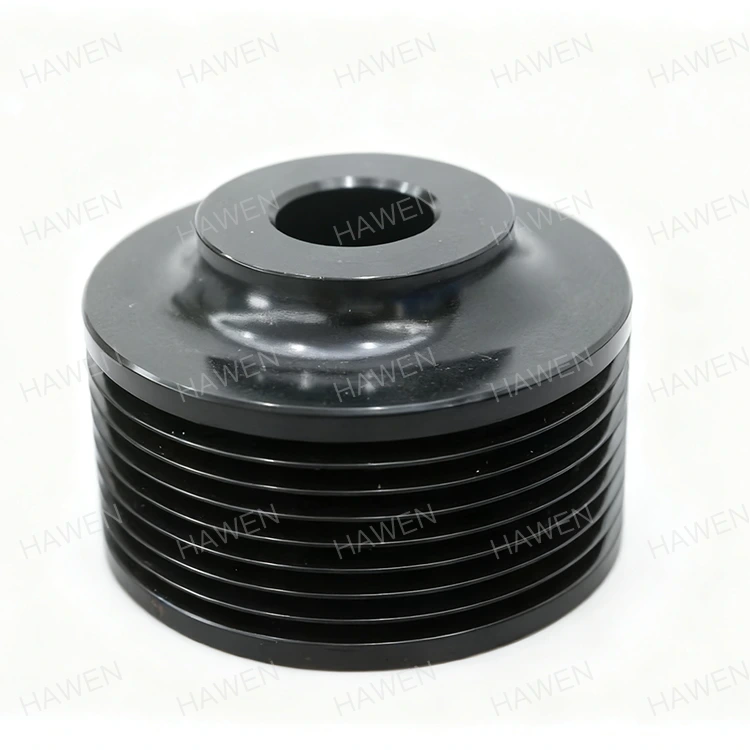
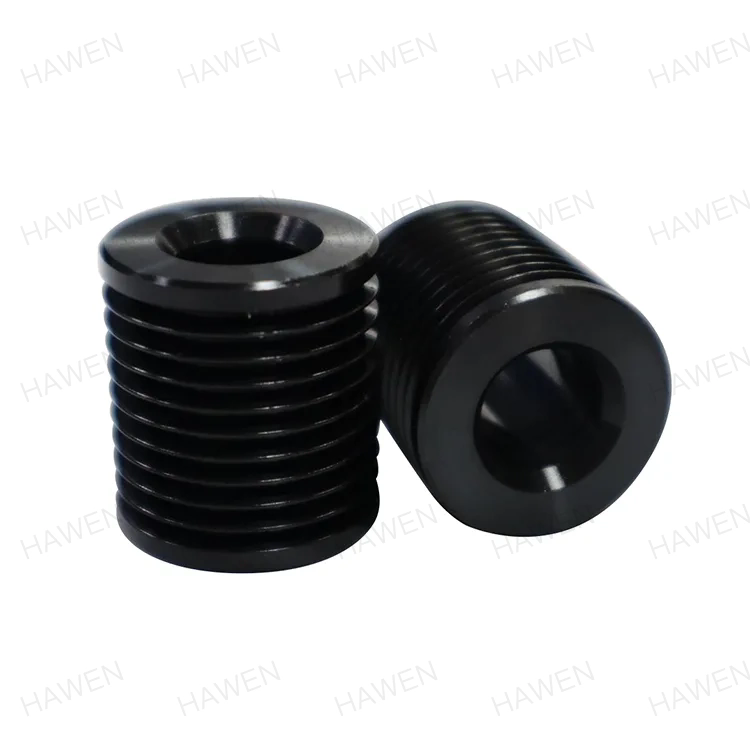
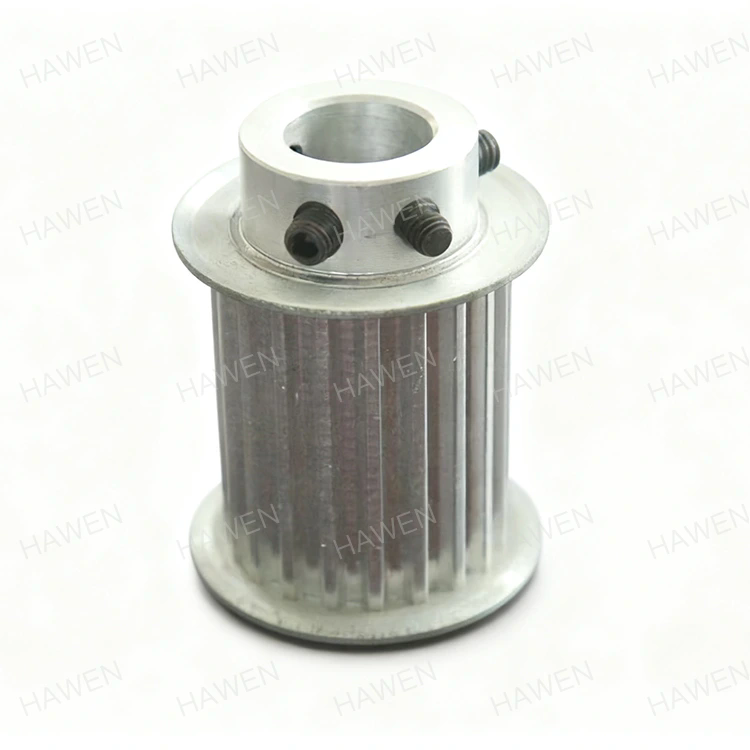
While often overlooked in favor of more prominent components like the motor or the driven machine itself, the motor sheave is a critical piece of engineering that sits at the very heart of countless mechanical systems. This simple, wheel-like component is the launch point for power, the key to speed control, and a vital element in the efficient transfer of energy from an electric motor to its intended application.
What is a Motor Sheave?
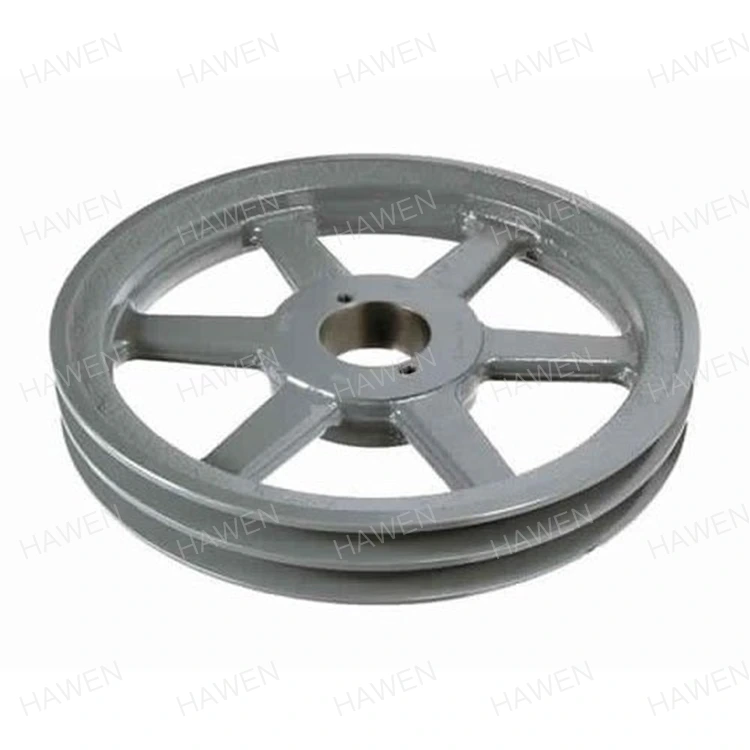
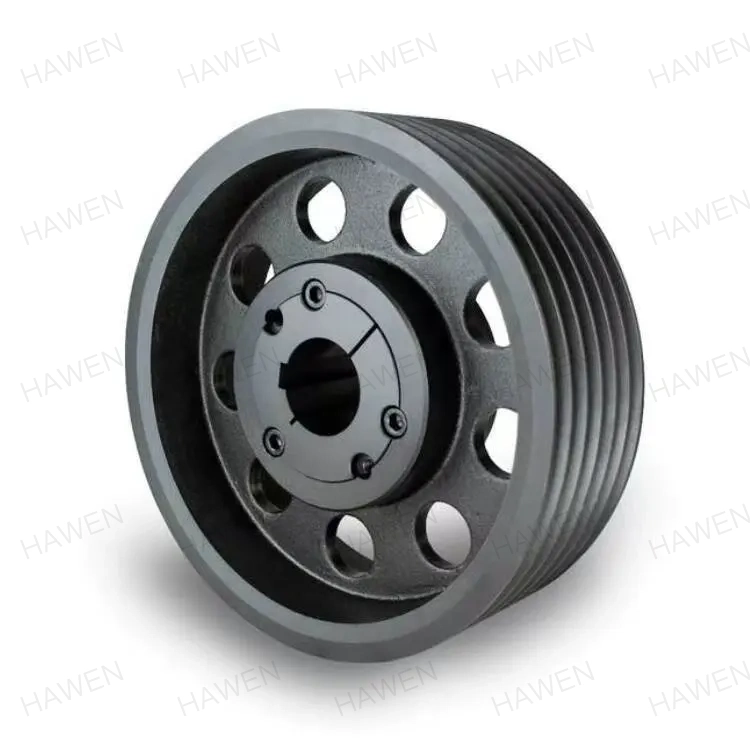
A motor sheave is a pulley wheel specifically mounted on the shaft (output) of an electric motor. It is the driving member in a belt drive system. Its grooves are designed to seat a V-belt (or in some cases, a timing belt or flat belt), which then loops around a matching driven sheave on the equipment being powered, such as a pump, fan, compressor, or conveyor.
Its primary functions are:
To Transmit Torque: It converts the rotational force (torque) of the motor shaft into a pulling force on the belt.
To Determine Speed: The diameter of the motor sheave is a fundamental factor in establishing the output speed of the system.
To Provide Grip: The grooved design creates wedging action, increasing friction and grip on the V-belt to prevent slippage under load.
The Physics of Speed Control: The Sheave Ratio
The most important role of a motor sheave is governing speed through a simple ratio. The speed relationship between the motor and the driven machine is inversely proportional to the diameters of the sheaves.
This simple equation is powerful. By changing the diameter of the motor sheave, an engineer or technician can easily increase or decrease the final output speed without altering the motor itself. A larger motor sheave will drive the belt faster, increasing the driven machine's speed. A smaller motor sheave will reduce it. This makes the motor sheave a primary tool for system tuning and optimization.
Key Design Features and Materials
A motor sheave is not just a simple wheel; its design is tailored for performance and durability:
Groove Profile: The V-shaped groove matches the belt's cross-section. Standard profiles include A, B, and C sections (light to heavy duty). The groove angle is precision-machined to ensure optimal belt contact and sidewall grip.
Bore and Keyway: The central bore is machined to a precise size to fit the motor shaft perfectly. A keyway slot accepts a metal key that locks the sheave to the shaft, ensuring they rotate as a single unit without slipping.
Construction & Materials: Typically made from cast iron, ductile iron, or pressed steel. Cast iron offers excellent durability, vibration damping, and resistance to wear. Aluminum is sometimes used for lightweight applications. The grooves are often machined and balanced to ensure smooth, vibration-free operation at high speeds.
Applications: Where Motor Sheaves are Essential
Motor sheaves are ubiquitous in industries and systems that rely on belt-driven mechanics:
HVAC Systems: Driving fans and blowers in commercial air handling units and residential furnaces.
Industrial Machinery: Powering conveyor belts, machine tools, and packaging equipment.
Agricultural Equipment: Found in tractors, combines, and irrigation pumps.
Automotive: In engine accessory drives (serpentine belt systems), the crankshaft pulley acts as the primary motor sheave.
Manufacturing Plants: Driving pumps, compressors, and exhaust systems.
Maintenance and Selection Considerations
Proper sheave selection and maintenance are crucial for system longevity:
Matched Sets: Sheaves and belts should be replaced as matched sets. A worn sheave will rapidly destroy a new belt, and vice-versa.
Alignment: The motor sheave must be perfectly aligned (both angular and parallel) with the driven sheave to prevent premature belt wear, noise, and energy loss.
Wear Inspection: Regular checks for groove wear are essential. Glazing, cracking, or a "hooked" groove profile indicates it's time for replacement to maintain efficiency.
The Evolution: From Fixed to Variable
While traditional fixed-diameter motor sheaves are the workhorses of industry, technology has evolved. Variable Pitch Motor Sheaves allow the groove width to be adjusted manually or automatically while the system is running. By changing the effective pitch diameter, this provides a stepless range of output speeds from a single-speed motor, offering greater control and flexibility.
Conclusion
The motor sheave is a masterpiece of focused engineering. It transforms raw motor rotation into controlled, usable mechanical power with precision and reliability. Its unassuming presence on a motor shaft belies its critical role as the first domino in a chain of motion that drives modern industry and infrastructure. By mastering the fundamental principles of diameter, ratio, and grip, the motor sheave remains an indispensable, efficient, and elegantly simple component in the world of mechanical power transmission.
We use cookies to offer you a better browsing experience, analyze site traffic and personalize content. By using this site, you agree to our use of cookies.
Privacy Policy