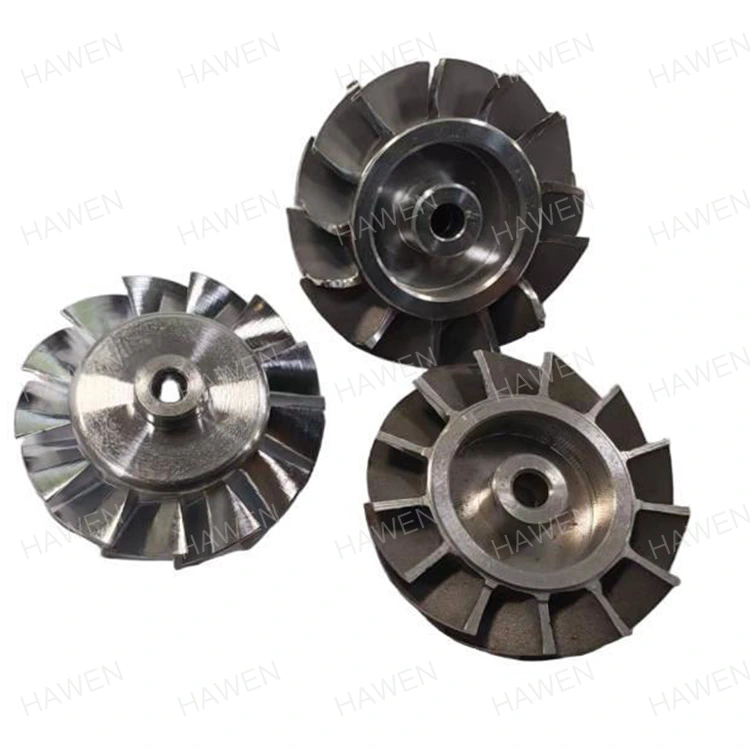
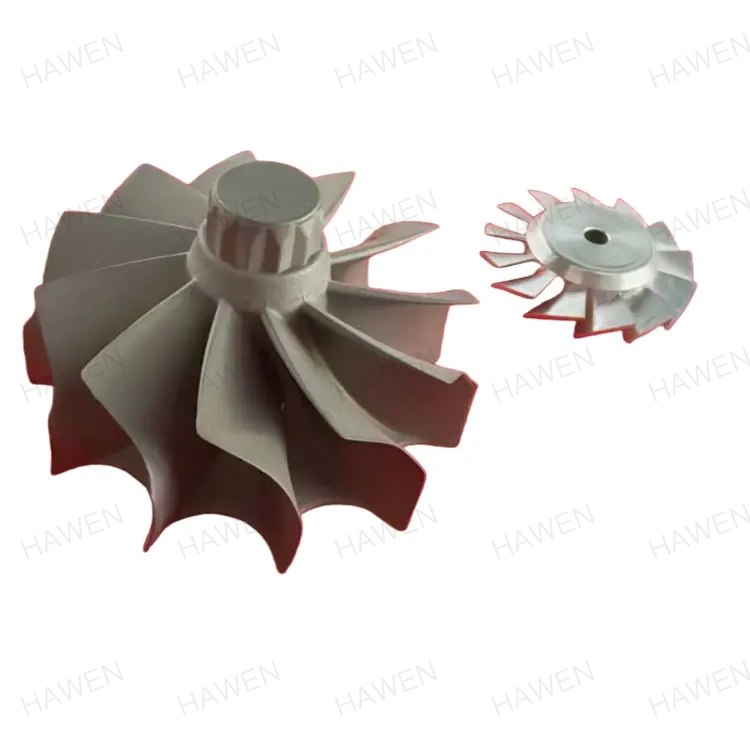
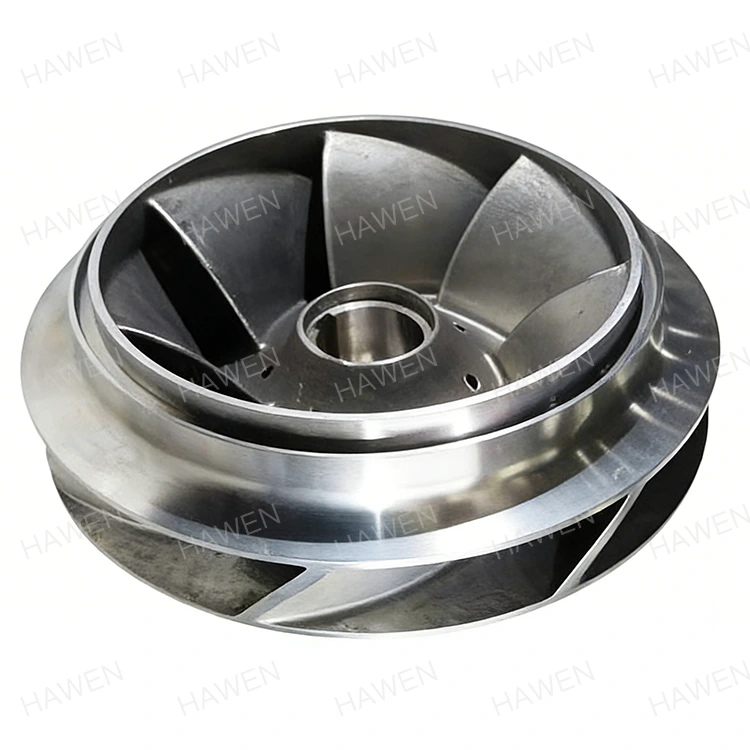
An impeller is the rotating component in a centrifugal pump that transfers energy from the motor to the fluid. It is the heart of the pump, and its design determines the pump's efficiency, its ability to handle solids, its wear characteristics, and its suitability for different fluids. The three main types of impellers—open, semi-open, and closed—are distinguished by the presence or absence of a front shroud and a back shroud. The shrouds are the side walls that enclose the impeller vanes. An open impeller has no shrouds, a semi-open impeller has a back shroud only, and a closed impeller has both front and back shrouds. This structural difference drives the performance characteristics of each type. For a procurement manager sourcing Impellers, understanding these differences is essential for selecting the right impeller for the pump's duty point.
This guide is written for buyers who need to choose between open, semi-open, and closed impellers for their pump application. We will compare the three types across efficiency, solids handling, wear resistance, and typical applications. We will explain the scenarios where each type is the correct choice, and we will provide a specification checklist and supplier evaluation criteria. We will also provide detailed product parameters from our factory at Zhejiang Hawen Electromechanical Co., Ltd. Whether you are sourcing impellers for a wastewater treatment plant, a chemical process, a food processing line, or a clean water supply, this guide will help you select the right impeller for the duty.
The structural difference between open, semi-open, and closed impellers is the presence of shrouds. A shroud is a circular plate that covers the vanes on one or both sides. An open impeller has no shrouds. The vanes are attached to a central hub and are open on both sides. A semi-open impeller has a back shroud but no front shroud. The vanes are attached to the back shroud and the hub, and they are open on the front side. A closed impeller has both a front shroud and a back shroud. The vanes are enclosed between the two shrouds, forming a series of sealed channels. The table below summarizes the structural differences.
| Feature | Open Impeller | Semi-Open Impeller | Closed Impeller |
| Front Shroud | No | No | Yes |
| Back Shroud | No | Yes | Yes |
| Vane Enclosure | Open on both sides | Open on front side | Fully enclosed |
| Structural Rigidity | Lowest | Moderate | Highest |
At Zhejiang Hawen Electromechanical Co., Ltd., our factory manufactures all three types of Impellers for centrifugal pump applications. We understand that the structural difference drives the performance difference, and we work with our customers to select the type that matches their duty. Our goal is to provide impellers that deliver reliable performance in the intended application.
Efficiency favors the closed impeller because the shrouds enclose the vanes and prevent fluid from leaking around the tips of the vanes. In an open or semi-open impeller, there is a clearance between the vane tips and the pump casing. Fluid can leak through this clearance, reducing the effective flow and the efficiency. The closed impeller eliminates this leakage path because the fluid is confined within the channels formed by the vanes and the shrouds. This results in higher efficiency, especially at higher heads. The table below compares the efficiency characteristics of the three types.
| Parameter | Open Impeller | Semi-Open Impeller | Closed Impeller |
| Typical Efficiency | 40% - 60% | 50% - 70% | 70% - 85% |
| Leakage Path | High (vane tip clearance) | Moderate (vane tip clearance) | Low (enclosed channels) |
| Head Capability | Low | Moderate | High |
| Best Suited For | Low-head, solids-laden fluids | Medium-head, mild solids | High-head, clean fluids |
At our factory, we design our closed impellers with precision-machined shrouds and vanes to minimize the internal leakage and maximize the efficiency. We test the efficiency of each impeller design in our hydraulic laboratory. Our goal is to provide our customers with impellers that meet their efficiency targets.
Solids handling favors the open and semi-open impellers because they do not have the enclosed channels that can become clogged. In a closed impeller, the channels between the vanes and the shrouds are narrow, and large or fibrous solids can become trapped, leading to blockage and reduced performance. In an open impeller, the vanes are exposed, and solids can pass through without becoming trapped. The semi-open impeller offers a compromise: the back shroud provides some structural support, while the open front allows solids to pass. The table below compares the solids handling capability of the three types.
| Parameter | Open Impeller | Semi-Open Impeller | Closed Impeller |
| Maximum Solids Size | Large | Moderate | Small |
| Clogging Risk | Low | Moderate | High |
| Fibrous Material Handling | Good | Moderate | Poor |
| Best Suited For | Wastewater, slurries | Light slurries, food processing | Clean fluids |
At Zhejiang Hawen Electromechanical Co., Ltd., our factory manufactures open and semi-open impellers with generous clearances and smooth vane profiles to handle solids without clogging. We can customize the vane geometry and the clearance to suit the specific solids size and concentration. Our goal is to provide impellers that handle the solids in the fluid without blockages.
The wear and maintenance implications differ significantly between the three impeller types. The open impeller is the most susceptible to wear because the vane tips run close to the casing, and the clearance between the vane tips and the casing increases as the impeller wears. This clearance increase reduces the efficiency and requires periodic adjustment or replacement. The semi-open impeller has a similar wear mechanism but is less susceptible because the back shroud provides some protection. The closed impeller is the most wear-resistant because the shrouds protect the vanes from direct impact with solids and the internal surfaces are less exposed to abrasive wear. The table below summarizes the wear and maintenance characteristics.
| Parameter | Open Impeller | Semi-Open Impeller | Closed Impeller |
| Wear Rate | High | Moderate | Low |
| Clearance Adjustment | Required periodically | Required occasionally | Not required |
| Maintenance Frequency | High | Moderate | Low |
| Replacement Cost | Low | Moderate | High |
At our factory, we manufacture our Impellers from wear-resistant materials, such as high-chrome iron and stainless steel, to extend the service life in abrasive applications. We also provide clearance adjustment kits for open and semi-open impellers. Our goal is to help our customers minimize the maintenance cost and maximize the pump uptime.
The choice of impeller type depends on the fluid characteristics and the pump duty. The table below provides a guide to matching the impeller type to the application.
| Application | Recommended Impeller Type | Reason |
| Clean water supply | Closed | High efficiency, high head |
| Chemical processing | Closed | Corrosion resistance, efficiency |
| Wastewater with large solids | Open | Clog-free operation |
| Light slurries | Semi-Open | Balance of solids handling and efficiency |
| Food processing with soft solids | Semi-Open | Cleanability and solids passage |
| High-head clean fluids | Closed | Maximum efficiency and head |
At Hawen, our factory produces all three impeller types and can advise on the best choice for your specific application. We work with our customers to understand their fluid characteristics and duty requirements. Our goal is to provide the impeller that delivers the best performance and reliability for the application.
Evaluating a supplier of Impellers requires a focus on material quality, manufacturing precision, hydraulic performance, and technical support. The supplier must use high-quality materials that resist wear and corrosion. They must have the capability to machine the impeller to the required tolerances and balance it for smooth operation. They must provide performance data, including flow, head, and efficiency curves. And they must provide technical support to help you select the right impeller. The table below summarizes the evaluation criteria.
| Evaluation Criterion | What to Look For | Why It Matters |
| Material Quality | High-chrome iron, stainless steel | Ensures wear and corrosion resistance |
| Manufacturing Precision | CNC machining, dynamic balancing | Ensures smooth operation and efficiency |
| Hydraulic Performance | Flow, head, and efficiency curves | Enables accurate selection |
| Technical Support | Impeller selection, application engineering | Helps choose the right type |
| Project Experience | References in relevant industries | Demonstrates capability and reliability |
At our factory, we have been producing Impellers for over a decade. We use high-quality materials, precision machining, and dynamic balancing to ensure reliable performance. Our technical team is available to assist with impeller selection and application engineering. We invite you to evaluate us against these criteria and to consider us as your partner for Impellers.
The following table provides the key product parameters for our Impellers. These impellers are available in open, semi-open, and closed configurations to suit different pump applications. Our factory can also produce custom impellers to meet specific requirements.
| Parameter | Specification Range | Notes |
| Impeller Type | Open, Semi-Open, Closed | Selected for fluid and duty |
| Material | Cast Iron, High-Chrome Iron, Stainless Steel | Selected for wear and corrosion |
| Outer Diameter | 100 - 800 mm | Custom sizes available |
| Number of Vanes | 3 - 8 | Selected for solids handling |
| Balancing Grade | G6.3 or better | Ensures smooth operation |
| Surface Finish | Machined, polished | Selected for efficiency and cleanliness |
| MOQ | 5 pieces | Negotiable for large orders |
| Lead Time | 3 - 6 weeks | Depends on quantity and customization |
At our factory, we manufacture our Impellers to meet these specifications and more. We can customize the type, material, dimensions, and vane count to suit your specific requirements. Our quality control system includes inspection of raw materials, in-process inspection, and final inspection before shipment. Our goal is to provide our customers with high-quality Impellers that meet their performance requirements.
Question 1: What is the main difference between an open and a closed impeller?
Answer: The main difference is the presence of shrouds. An open impeller has no shrouds, so the vanes are exposed on both sides. A closed impeller has both a front and a back shroud, so the vanes are enclosed in channels. The closed impeller is more efficient but less tolerant of solids. The open impeller is less efficient but handles solids without clogging.
Question 2: Which impeller type is best for wastewater with large solids?
Answer: An open impeller is the best choice for wastewater with large solids. The open design allows solids to pass through without becoming trapped in narrow channels. A closed impeller would be prone to clogging in this application. A semi-open impeller may be suitable for smaller solids or fibrous materials, but for large solids, the open impeller is the most reliable choice.
Question 3: Why is a closed impeller more efficient than an open impeller?
Answer: A closed impeller is more efficient because the shrouds enclose the vanes and prevent fluid from leaking around the vane tips. In an open impeller, there is a clearance between the vane tips and the casing, and fluid can leak through this clearance, reducing the effective flow and efficiency. The closed impeller eliminates this leakage path, resulting in higher efficiency, especially at higher heads.
Question 4: How do I choose between a semi-open and a closed impeller?
Answer: Choose a semi-open impeller when the fluid contains light solids or fibrous material that could clog a closed impeller, but the efficiency requirement is higher than an open impeller can provide. Choose a closed impeller when the fluid is clean and the priority is high efficiency and high head. The choice depends on the balance between solids handling and efficiency for your specific application.
Question 5: What materials are used for impellers in abrasive applications?
Answer: For abrasive applications, impellers are typically made from high-chrome iron or stainless steel. High-chrome iron offers excellent wear resistance and is used in mining and slurry applications. Stainless steel is used in corrosive and hygienic applications. The material selection depends on the specific fluid characteristics and the wear mechanism. Our factory can advise on the best material for your application.
Open, semi-open, and closed impellers each have their own performance characteristics, and the right choice depends on the fluid and the duty. The closed impeller offers the highest efficiency and is suited to clean fluids at high heads. The open impeller offers the best solids handling and is suited to wastewater and slurries. The semi-open impeller offers a balance between the two and is suited to light slurries and food processing. By understanding these differences and matching the impeller to the application, buyers can specify a pump that delivers reliable performance and low maintenance. At Zhejiang Hawen Electromechanical Co., Ltd., our factory manufactures all three impeller types to the highest standards of quality and performance.
Whether you are sourcing impellers for a wastewater treatment plant, a chemical process, a food processing line, or a clean water supply, we invite you to contact us to discuss your requirements. We can provide samples, technical data, and customized solutions. Our commitment to quality and customer satisfaction has made us a trusted partner for pump and impeller buyers around the world.
Contact Zhejiang Hawen Electromechanical Co., Ltd. today to discuss your Impeller requirements and discover how our products can meet your pump application needs.
-
Address:No.809 Jinniu Street, Bihu Town, Liandu District, Lishui City, Zhejiang Province China
Copyright © 2026 Zhejiang Hawen Electromechanical Co., Ltd. All Rights Reserved. Links| Sitemap| RSS| XML| Privacy Policy