News

What makes Belt Pulleys ideal for long-term continuous equipment operation?

2026-09-01 0 Leave me a message

In a vast cement plant, a 500 kW motor has been driving a heavy-duty conveyor belt for over 80,000 hours—nearly a decade of continuous, three-shift operation. The key component that has silently and reliably transmitted this immense power is a set of Belt Pulleys. These unassuming wheels, with their precisely machined grooves and balanced construction, have been the unsung heroes of the plant's productivity. While bearings have been replaced and motors have been rewound, the Belt Pulleys have remained, faithfully transferring power without interruption. This is not a coincidence; it is a testament to the inherent advantages of Belt Pulleys as a power transmission solution for long-term, continuous equipment operation.


The suitability of Belt Pulleys for continuous operation is not a single attribute but the result of a combination of engineering principles. Their robust construction and material strength provide resistance to wear and fatigue, while the soft-start capability of belt drives reduces shock loading on the system. The simplicity of the pulley system facilitates easy maintenance, and the thermal stability of the pulleys minimizes heat-related performance degradation. In this article, we will dissect the specific characteristics that make Belt Pulleys the preferred choice for long-term, continuous-duty applications. From the selection of materials and the precision of manufacturing to the effects of balancing and surface treatments, we will examine how each factor contributes to the unparalleled reliability of Belt Pulleys in demanding industrial environments.

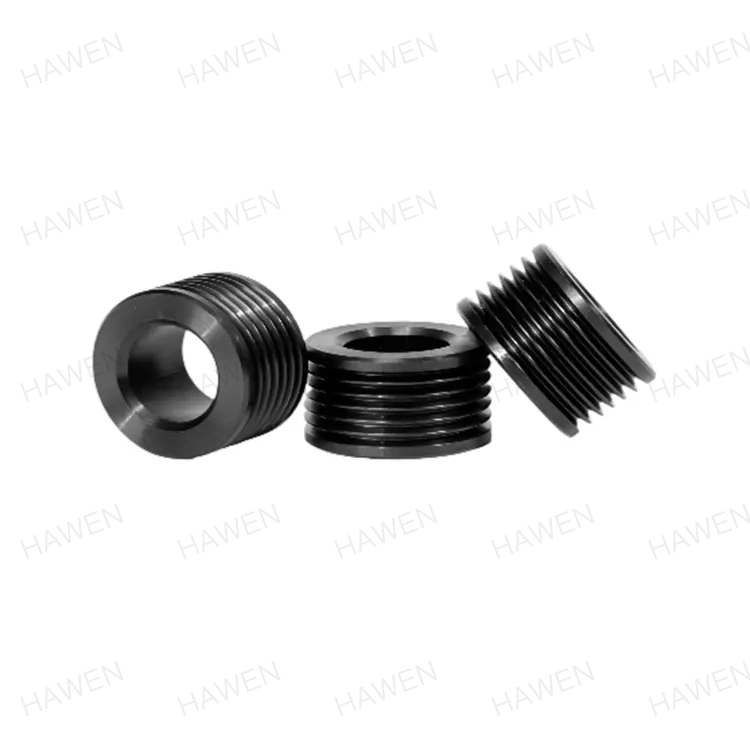
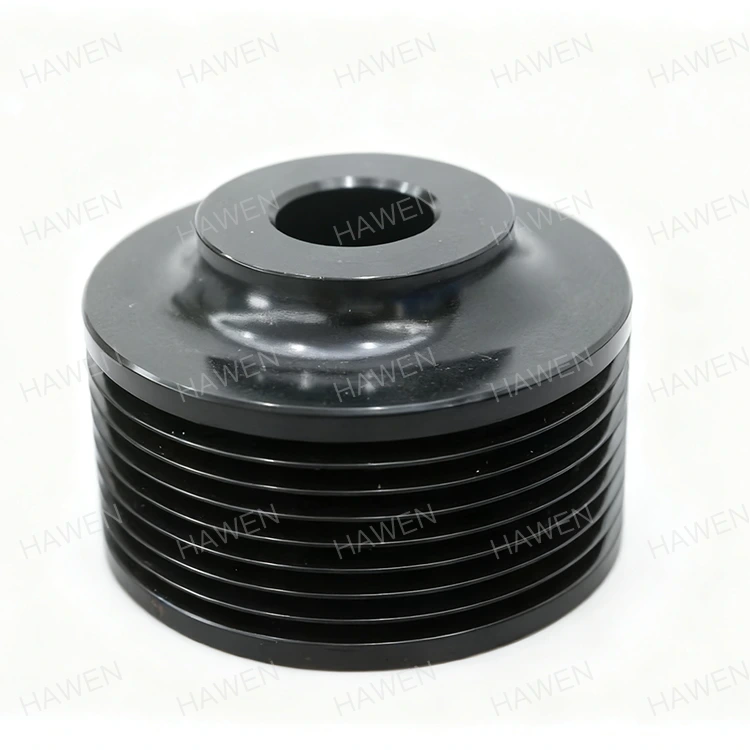
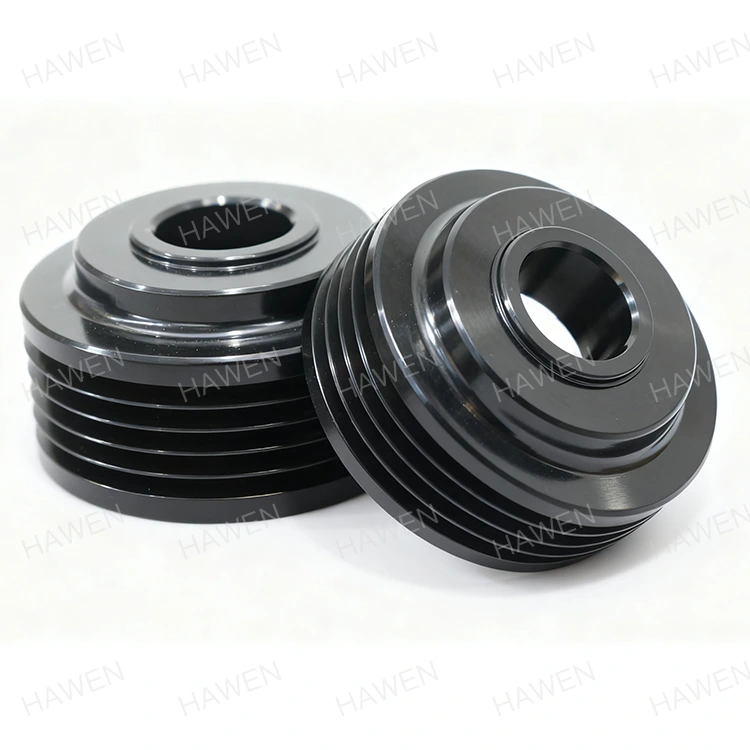
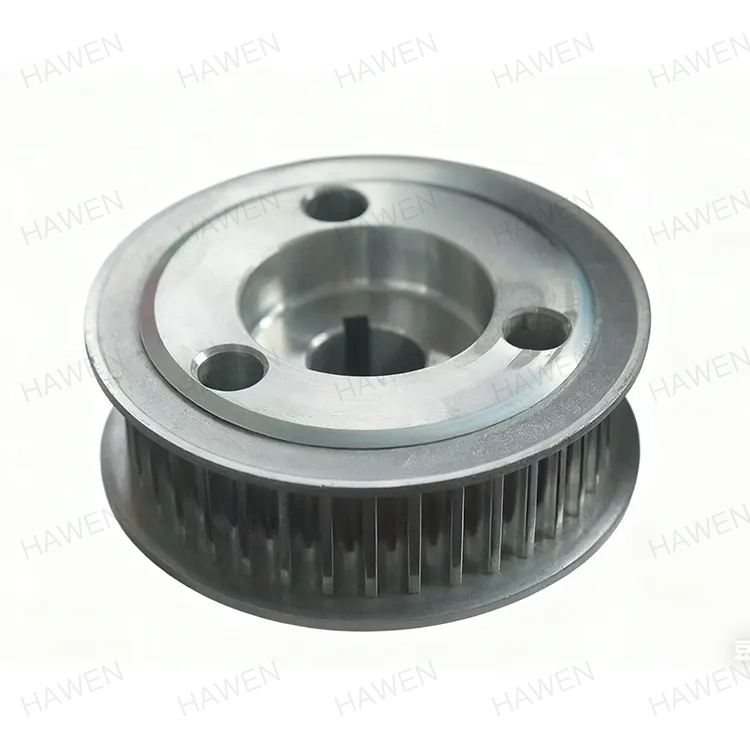
Narrow V-Belt Pulley


Table of Contents


1. What Are Belt Pulleys and Why Are They Essential for Power Transmission?

Belt Pulleys are mechanical components used in power transmission systems to transfer rotational motion and torque from a driving shaft to a driven shaft. They consist of a wheel with a grooved rim that engages with a belt. The belt wraps around the pulleys, and the friction between the belt and the pulleys allows the transfer of power. Belt Pulleys are a fundamental component of belt drive systems, which are widely used in industrial applications for their ability to transmit power over long distances, provide speed variation, and absorb shock loads. The design of a Belt Pulley is critical to the performance and reliability of the entire drive system.

There are several key factors that make Belt Pulleys essential for power transmission in industrial settings. Firstly, they are versatile. They can be used in a variety of configurations, including single-belt, multi-belt, and timing-belt drives, to meet different power and speed requirements. Secondly, they are cost-effective, offering a lower cost of ownership than many other power transmission methods. Thirdly, they are relatively easy to install and maintain, reducing downtime. However, the fundamental reason for their prevalence is their reliability in continuous operation.

A typical Belt Pulley system consists of a driver pulley (connected to the motor), a driven pulley (connected to the load), and one or more belts. The driver pulley is usually smaller than the driven pulley, which provides a speed reduction and torque multiplication. The selection of the Belt Pulley material, size, and profile depends on the specific application requirements, such as the power to be transmitted, the speed ratio, the environment, and the expected service life. At Zhejiang Hawen Electromechanical Co., Ltd., we manufacture Belt Pulleys that are designed to meet these varied requirements, offering products that are engineered for long-term reliability and performance.


2. How Does Material Selection and Construction Enhance Long-Term Durability?

The material from which a Belt Pulley is made is the foundation of its durability. The choice of material directly impacts the pulley's resistance to wear, fatigue, impact, and corrosion. The most common materials for Belt Pulleys are cast iron, ductile iron, steel, and aluminum. Each material has its own set of properties that make it suitable for different applications. For example, cast iron, with its high damping capacity, is excellent for applications where vibration is a concern. Steel, with its high strength and toughness, is ideal for heavy-duty, high-torque applications. Aluminum, being lightweight, is often used in applications where weight reduction is important.

But the material alone does not define the durability of a Belt Pulley. The casting or forging process is equally critical. A high-quality cast iron Belt Pulley will have a uniform, fine-grained structure with no porosity or inclusions. This ensures that the pulley can withstand the stresses of operation without cracking or failing. Similarly, a forged steel Belt Pulley will have a continuous grain flow, providing superior strength and fatigue resistance. The manufacturing process must be carefully controlled to achieve the desired mechanical properties. At our factory, we employ modern casting and forging techniques to produce Belt Pulleys with the highest possible quality and consistency.

The table below provides a comparison of common materials used for Belt Pulleys and their key properties.

Material Tensile Strength (MPa) Hardness (HB) Damping Capacity Corrosion Resistance Typical Applications
Cast Iron (GG25) 250 200 High Moderate General-purpose, low to medium speed
Ductile Iron (GGG40) 400 190 Moderate Moderate High-load, high-speed applications
Steel (C45) 600 200 Low Low Heavy-duty, high-torque applications
Stainless Steel (304) 520 180 Low Excellent Food processing, chemical, corrosive environments
Aluminum (AlSi10Mg) 280 80 Low Good (with coating) Lightweight applications, high-speed

In addition to the base material, the surface treatment or coating of the Belt Pulley can further enhance its durability. Common surface treatments include paint, powder coating, galvanizing, and nitriding. These treatments provide protection against corrosion, wear, and environmental factors. For example, a Belt Pulley used in a harsh environment might receive a zinc-nickel plating to provide excellent corrosion protection. At Hawen, we offer a range of surface treatments to meet the specific needs of our customers.


3. What Role Does Precision Manufacturing Play in Reducing Wear and Vibration?

Precision manufacturing is the key to reducing wear and vibration in Belt Pulleys. The quality of the pulley's dimensions, surface finish, and balance directly affects its performance and longevity. A pulley that is not manufactured to precise tolerances will have high runout, which will cause the belt to vibrate, leading to premature wear of the belt and the pulley. In addition, an unbalanced pulley will cause vibration, which can damage the shaft and bearings, leading to premature failure. For continuous, long-term operation, precision is non-negotiable.

The manufacturing process for a high-quality Belt Pulley begins with the selection of the raw material, which is carefully inspected for quality. The material is then machined using computer numerical control (CNC) lathes and milling machines to achieve the required dimensions and surface finish. The grooved profile is critical for belt engagement; it must be precise to ensure proper traction and minimize belt wear. After machining, the pulley is balanced to a specified grade. Balancing is a process where the pulley is rotated at high speed, and any unbalance is detected and corrected by adding or removing material. This ensures that the pulley runs smoothly, minimizing vibration and extending the life of the bearings and belts.

To illustrate the importance of precision, consider a Belt Pulley that has a runout of 0.02 mm. This is considered a very high quality. A runout of 0.1 mm, which is less precise, will cause the belt to whip, generating vibration and accelerating wear. The difference in service life between these two pulleys can be significant. The following table provides a summary of the key manufacturing tolerances and their impact on Belt Pulley performance.

Parameter Typical Tolerance Impact on Performance Recommended Measurement
Runout < 0.05 mm Reduced belt vibration and wear Dial indicator on a lathe
Balance Grade G6.3 or better Minimized vibration, longer bearing life Dynamic balancing machine
Surface Finish (Ra) < 1.6 µm Reduced belt slippage and wear Surface roughness tester
Groove Geometry +/- 0.1 mm Proper belt engagement, even power transmission Optical comparator or CMM

At Hawen, we are committed to the highest standards of precision manufacturing. Our factory is equipped with state-of-the-art CNC machining centers and dynamic balancing machines. Every Belt Pulley that leaves our factory is inspected to ensure that it meets the strictest tolerances. This commitment to precision is what enables our Belt Pulleys to deliver reliable performance over long periods of continuous operation.


4. How Does the Belt Drive System Protect Against Shock Loads and Overloads?

One of the key advantages of a belt drive system, and by extension the Belt Pulley, is its inherent ability to protect the driven equipment from shock loads and overloads. Unlike a direct drive or a chain drive, which transmits shock loads directly, a belt drive absorbs these loads. This is a critical advantage for equipment that is subject to frequent starts and stops or that experiences sudden changes in load.

When a shock load occurs, such as a sudden jam or a blockage in a conveyor, the belt will slip on the Belt Pulleys instead of transmitting the full force to the motor or the driven shaft. This slip absorbs the energy of the shock, protecting the motor, the gearbox, and the driven equipment from damage. The belt acts as a mechanical fuse, sacrificing itself to protect the more expensive components. This is a unique benefit of belt drive systems that is not found in other power transmission methods.

The ability to absorb shock loads is a result of the elastic properties of the belt material and the frictional contact between the belt and the pulleys. The belt is designed to stretch slightly under load, absorbing energy and reducing the peak force on the system. This is particularly important for applications with high inertia loads, such as crushers and mixers. In these applications, the belt drive provides a smooth, controlled start-up, reducing the stress on the motor and the driven equipment. This feature is especially valuable in continuous operation where the costs of downtime are high.

Moreover, belt drives offer overload protection. If the load on the driven equipment exceeds the capacity of the belt, the belt will slip, preventing the motor from stalling or the equipment from being damaged. This is a simple but effective method of overload protection. In addition to mechanical protection, the belt drive also helps to reduce noise and vibration, contributing to a quieter and more comfortable working environment. This is due to the damping properties of the belt, which absorb and reduce the transmission of vibrations from the motor to the driven equipment. At Zhejiang Hawen Electromechanical Co., Ltd., our Belt Pulleys are designed to work in harmony with the belts, providing a robust and reliable power transmission system that protects your equipment.


5. Why Is Thermal Management Critical for Continuous Operation?

Heat is the enemy of long-term, continuous equipment operation. Excessive heat accelerates wear, reduces the life of lubricants, and can cause components to fail prematurely. Belt Pulleys are no exception. The heat generated by the friction between the belt and the pulley, and by the flexing of the belt, must be managed to ensure reliable operation. Thermal management is a critical factor in the design and selection of Belt Pulleys for continuous duty applications.

Heat in a belt drive system is generated primarily by the following mechanisms: friction at the belt-pulley interface, hysteresis losses in the belt material, and aerodynamic drag. Friction is the primary source of heat, and it is influenced by the belt tension, the coefficient of friction, the belt speed, and the ambient temperature. If the heat is not dissipated effectively, it can cause the belt to overheat, leading to premature wear, hardening, and cracking. It can also cause the Belt Pulley to expand, potentially leading to changes in belt tension and alignment.

The material of the Belt Pulley plays a significant role in its thermal management. Metals, such as steel and cast iron, are good conductors of heat, allowing them to dissipate heat away from the belt-pulley interface and into the surrounding air. Some materials, such as aluminum, have an even higher thermal conductivity, making them more efficient at dissipating heat. The geometry of the pulley also affects its thermal performance. Pulleys with larger diameters have more surface area to dissipate heat, while those with cooling fins or other features are designed to enhance heat transfer. In addition, the surface finish of the pulley can affect heat generation. A smoother finish reduces friction, thereby reducing heat generation.

To manage heat effectively in a belt drive system, it is important to consider the operating conditions, the belt selection, and the pulley design. For example, in high-temperature environments, it may be necessary to use a belt that is specifically designed for high-temperature operation. It may also be beneficial to use a Belt Pulley with a larger diameter to reduce the belt bending stress and heat generation. At Hawen, our engineering team can assist you in selecting the appropriate Belt Pulleys and drive components for your specific operating conditions.


6. What Maintenance Practices Extend the Service Life of Belt Pulleys?

Even the best-engineered Belt Pulleys require regular maintenance to achieve their full service life. A well-maintained pulley system will operate reliably for many years, while a neglected system will experience premature failures and costly downtime. The following maintenance practices are essential for extending the service life of Belt Pulleys in continuous operation.

  • Regular Tension Checks: The belt tension must be checked regularly. Too much tension increases bearing loads and belt wear, while too little tension causes belt slippage, which generates heat and accelerates wear. The tension should be checked using a belt tension gauge and adjusted to the manufacturer's specifications.
  • Alignment Inspection: Misalignment of the Belt Pulleys is a common cause of premature belt and pulley wear. The pulleys should be checked for parallel alignment using a straight edge or a laser alignment tool. Misalignment can cause the belt to run off the pulley or to wear unevenly.
  • Cleaning: The pulleys should be kept clean of dirt, dust, and oil. Contamination can cause the belt to slip or to wear prematurely. The pulleys can be cleaned with a mild solvent and a non-abrasive cloth.
  • Inspection for Wear: The pulleys should be inspected for signs of wear, such as wear on the groove walls or the development of a polished surface. The belt should also be inspected for signs of wear, such as cracking, fraying, or glazing. A worn pulley groove will not provide proper belt engagement, leading to reduced power transmission and accelerated belt wear.
  • Lubrication: While Belt Pulleys themselves do not require lubrication, the bearings that support them must be lubricated according to the manufacturer's recommendations. Proper lubrication of the bearings is essential for long-term, continuous operation.

In addition to these practices, it is also important to keep a log of maintenance activities and to observe the performance of the drive system. Any changes in temperature, vibration, or noise may indicate a problem that needs to be investigated. At Hawen, we provide detailed maintenance guidelines with our Belt Pulleys to help our customers achieve the maximum service life from their equipment.


7. Frequently Asked Questions (FAQ)

Question 1: What is the expected service life of a high-quality belt pulley under continuous operation?

Answer: A high-quality Belt Pulley, manufactured from durable materials and properly maintained, can have a service life of 50,000 to 100,000 operating hours or more. The exact service life depends on the operating conditions, the quality of the maintenance, and the specific application. Pulleys used in harsh environments or subjected to high loads may have a shorter service life. Our factory at Zhejiang Hawen Electromechanical Co., Ltd. produces Belt Pulleys designed for long-term, continuous operation, but we always recommend regular inspection and maintenance to ensure maximum service life.

Question 2: How do I determine the correct size of belt pulley for my application?

Answer: The size of the Belt Pulley is determined by the required speed ratio and the power to be transmitted. The speed ratio is the ratio of the diameters of the two pulleys. For example, a 10:1 speed ratio requires a driver pulley that is one-tenth the diameter of the driven pulley. The required pulley diameter is also influenced by the belt type and the power rating. We recommend consulting our engineering team or using a belt drive design guide to select the correct pulley size for your application.

Question 3: What are the signs that a belt pulley needs to be replaced?

Answer: The signs that a Belt Pulley needs to be replaced include: visible wear on the groove walls, the development of a polished surface, cracks or other damage to the pulley, and vibration in the drive system. A pulley that is damaged or worn will not provide proper belt engagement, leading to reduced power transmission and accelerated belt wear. If you observe any of these signs, the pulley should be inspected and replaced if necessary.

Question 4: Can belt pulleys be repaired or reconditioned?

Answer: In some cases, Belt Pulleys can be repaired or reconditioned. For example, a pulley with a worn groove can be re-machined to restore the correct profile. However, this is a specialized process and is not always cost-effective. In many cases, it is more economical to replace the pulley. Our factory offers reconditioning services for certain types of Belt Pulleys. Please contact our team to discuss the options for your specific pulley.

Question 5: How does belt tension affect the performance and life of a belt pulley?

Answer: Belt tension has a direct impact on the performance and service life of a Belt Pulley. If the tension is too high, it increases the bearing load and accelerates belt and pulley wear. If the tension is too low, the belt will slip, generating heat and accelerating belt wear, and may cause the pulley to spin, leading to wear on the pulley bore. The correct tension is essential for long-term, reliable operation. We recommend checking the tension regularly using a belt tension gauge.


8. Conclusion

Belt Pulleys are the unsung heroes of long-term, continuous equipment operation. Their robust construction, precise manufacturing, and inherent ability to protect against shock loads make them the preferred choice for a wide range of industrial applications. By carefully selecting the right material, ensuring proper manufacturing tolerances, and following a regular maintenance schedule, it is possible to achieve decades of reliable service from a Belt Pulley system. At Zhejiang Hawen Electromechanical Co., Ltd., we are dedicated to providing high-quality Belt Pulleys that are engineered for performance and longevity. Our products are designed to meet the demanding requirements of continuous industrial operation, and our team is committed to providing the best possible support to our customers.

If you are looking for a reliable and durable power transmission solution for your long-term, continuous operation, we invite you to learn more about our Belt Pulleys. Our expert team can assist you in selecting the right product for your application and provide guidance on installation and maintenance. Contact Zhejiang Hawen Electromechanical Co., Ltd. today to discuss your requirements.

Contact Zhejiang Hawen Electromechanical Co., Ltd. today to discover how our high-quality belt pulleys can enhance the reliability and longevity of your continuous equipment operation.

Related News
Leave me a message
X
We use cookies to offer you a better browsing experience, analyze site traffic and personalize content. By using this site, you agree to our use of cookies.Privacy Policy